
If you've ever walked into a workshop, café kitchen, or retail space and thought "wow,…
Epoxy Floor Maintenance Sunshine Coast: Keep Your Floor Looking New for 20+ Years
You spent good money on that epoxy floor. The installer left, you stood back, and honestly? It looked incredible. That glossy finish, the way it reflected the light — you were already planning which mates to invite over just to show it off.
Then life happened. Sand tracked in from the beach, a bit of oil from the car, a few scuff marks from the kids’ bikes. Now you’re wondering if you made the right call — and more importantly, whether that floor is ever going to look the same again. The good news is, with the right maintenance habits, epoxy floors on the Sunshine Coast can hold up beautifully for 20 years or more. Here’s exactly how to do it.
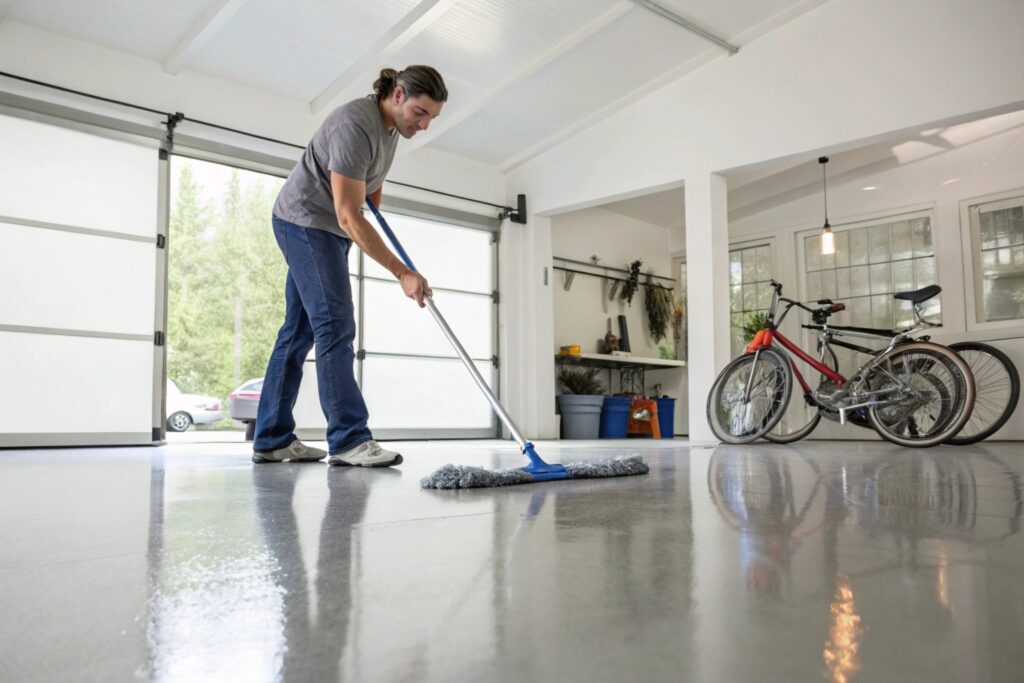
Daily and Weekly Epoxy Floor Care Routines
Let’s start with the basics — because honestly, most of the work happens here, and it’s easier than you think.
Daily habits that make a big difference:
- Sweep or dust mop to remove grit, sand, and debris. In Nambour, sand is everywhere, and those tiny particles act like sandpaper underfoot if you leave them sitting too long
- Wipe up spills as soon as they happen — especially oils, chemicals, or anything acidic like battery fluid
Weekly routine:
- Mop with warm water and a pH-neutral cleaner. Avoid anything harsh or abrasive — bleach, ammonia-based products, and citrus cleaners can break down the epoxy coating over time
- Check high-traffic zones for early signs of wear or scratching
That’s genuinely it for most weeks. Epoxy isn’t needy. It just needs consistency.
Seasonal Maintenance for Queensland Climate
Living on the Sunshine Coast means your garage floor deals with conditions that most of the country simply doesn’t. High humidity, salt air rolling in from the coast, and summer storms that bring moisture in from every direction — it all adds up.
According to the Bureau of Meteorology’s climate data for the Sunshine Coast, the region averages humidity levels well above 60% through the summer months — something worth keeping in mind when planning your maintenance schedule.
Summer (December – February):
- Humidity peaks, which means moisture can sneak under garage doors and sit on your floor. Make sure your garage has decent ventilation and wipe down any condensation you notice pooling near the edges
- After big storms, check for water intrusion around door seals and floor edges
Autumn and Winter (March – August):
- Cooler, drier months are actually the best time to do a deeper inspection of your floor’s surface
- Look for any areas where the coating might be lifting slightly or showing micro-scratches — catching these early saves you a lot of grief later
Spring (September – November):
- Pre-summer is the perfect time for a proper deep clean and reapplication of a topcoat sealer if your floor is getting older
- Salt air corrosion is a real issue in coastal areas — marine environments accelerate surface degradation significantly faster than inland locations, so don’t skip this step
Product Recommendations for Epoxy Floor Cleaning
Walk into any hardware store and you’ll find a wall of cleaning products that all claim to be perfect for hard floors. Most of them aren’t great for epoxy. Some are genuinely damaging. Here’s what actually works.
Go-to products for Sunshine Coast epoxy floors:
- pH-neutral floor cleaners — look for products specifically labelled safe for sealed or coated concrete floors. Rover and Aqua Mix are solid options available at most Australian hardware stores
- Microfibre mop heads — these lift grit without scratching the surface the way traditional string mops can
- Epoxy-safe degreasers — for oil or grease spots, a diluted degreaser applied directly to the stain, left for a few minutes, then wiped clean does the job without damaging the coating
Products to avoid completely:
- Steel wool or abrasive scrubbing pads
- Vinegar or citrus-based cleaners
- High-pressure washers directed at floor edges or joins — the force can lift the coating at vulnerable points
If you’re ever unsure whether a product is safe, test it on a small inconspicuous area first and wait 24 hours before using it across the whole floor.
When to Call Professionals for Maintenance Issues
Some things you can handle yourself on a Sunday afternoon. Others, if you try to DIY them, can end up costing you a lot more than a professional call-out fee would have.
Signs you should pick up the phone:
- Peeling or delamination — if sections of the coating are lifting away from the concrete underneath, that’s a bonding issue that needs professional assessment. It won’t fix itself and it will spread
- Deep scratches or gouges — surface scuffs are normal, but anything that cuts through to the concrete layer needs to be patched by someone who knows what they’re doing
- Persistent staining that won’t shift — some chemical stains penetrate deeper than the surface. A professional can assess whether a localised repair or full recoat is the right move
- Yellow or cloudy patches — this can indicate UV damage or moisture trapped beneath the coating, both of which need proper diagnosis before any treatment
The Queensland Building and Construction Commission recommends using licensed contractors for any remedial flooring work to protect your warranty and ensure the repair meets Australian standards.
Don’t wait until a small issue becomes a full recoat job. Catching problems early is almost always cheaper.
Extending Your Epoxy Floor’s Lifespan
A well-installed epoxy floor on the Sunshine Coast should last 20 years or more. But “should” is doing a lot of work in that sentence. The floors that actually hit that milestone are the ones that get a little bit of love along the way.
Practical habits that add years to your floor:
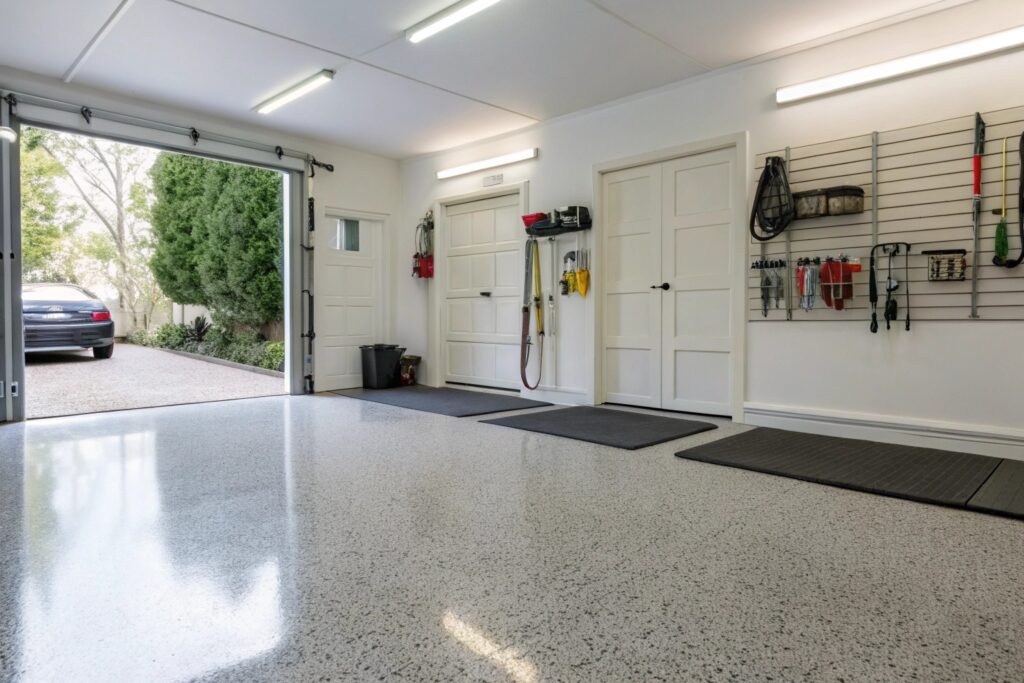
- Use floor mats at entry points — a mat just inside the garage door catches the bulk of sand, grit, and moisture before it has a chance to work across your floor surface
- Put protective pads under heavy equipment — jack stands, tool cabinets, and gym equipment can concentrate enormous weight on small contact points, which stresses the coating over time
- Avoid dragging heavy items — lift and place rather than drag. It sounds obvious but it’s one of the most common causes of deep scratching
- Reapply a topcoat every 5-7 years — this is the single biggest thing you can do to extend your floor’s life. Think of it like resealing a deck. The base is fine, you’re just refreshing the protective layer on top
For Sunshine Coast homes specifically:
- Keep garage doors closed during peak humidity periods where possible
- Rinse off any salt residue that blows in during coastal storms — salt is corrosive and will slowly degrade the coating if left sitting
Small habits, compounded over years, make an enormous difference.
Common Maintenance Mistakes That Void Warranties
This is the section most people skip — and then regret later when they go to make a warranty claim and get knocked back.
Mistakes that can void your warranty:
- Using the wrong cleaning products — most epoxy warranties explicitly exclude damage caused by harsh chemicals. That bottle of bleach you used to tackle a stain? If it lifted the coating, you’re likely on your own
- Skipping the manufacturer’s recommended maintenance schedule — warranties aren’t unconditional. If you can’t demonstrate you’ve looked after the floor, don’t expect the warranty to cover you
- Having unlicensed contractors do repair work — if someone other than a qualified professional touches your floor and makes it worse, most warranties won’t cover the resulting damage
- Ignoring moisture issues — if you noticed water pooling or condensation and did nothing about it for months, that’s going to be a tough conversation with your installer
Read your warranty document properly when the job is done. Keep a copy somewhere you can actually find it.
Ready to Keep Your Sunshine Coast Epoxy Floor Looking Its Best?
Epoxy floor maintenance on the Sunshine Coast doesn’t have to be complicated. Sweep regularly, use the right products, stay on top of seasonal checks, and get a professional in when something looks off. Do those things consistently and that floor will still be turning heads in 2045.
If you’ve got questions about your floor or want to book a maintenance inspection, get in touch with the team today — we’re local, we know the coastal conditions, and we’re here to help.

