
You're not in Noosa or Caloundra — you're somewhere in the middle of the Sunshine…
Commercial Epoxy Flooring Nambour: Business Solutions for High-Demand Spaces
If you’ve ever walked into a workshop, café kitchen, or retail space and thought “wow, that floor actually looks like it belongs here” — chances are you were standing on commercial epoxy. It’s not the same product your neighbour used in their garage. Commercial-grade systems are built for punishment: heavy foot traffic, chemical spills, forklifts, and inspectors with clipboards.
Nambour businesses face their own set of challenges. The Sunshine Coast humidity is no joke, and a floor that looks sharp on day one can start peeling, staining, or flaking within a year if the wrong system gets laid down. Whether you run a mechanic’s workshop on Currie Street, a food business near the CBD, or a retail showroom off the highway — this guide breaks down what commercial epoxy flooring actually involves, and why getting it right from the start saves you money in the long run.
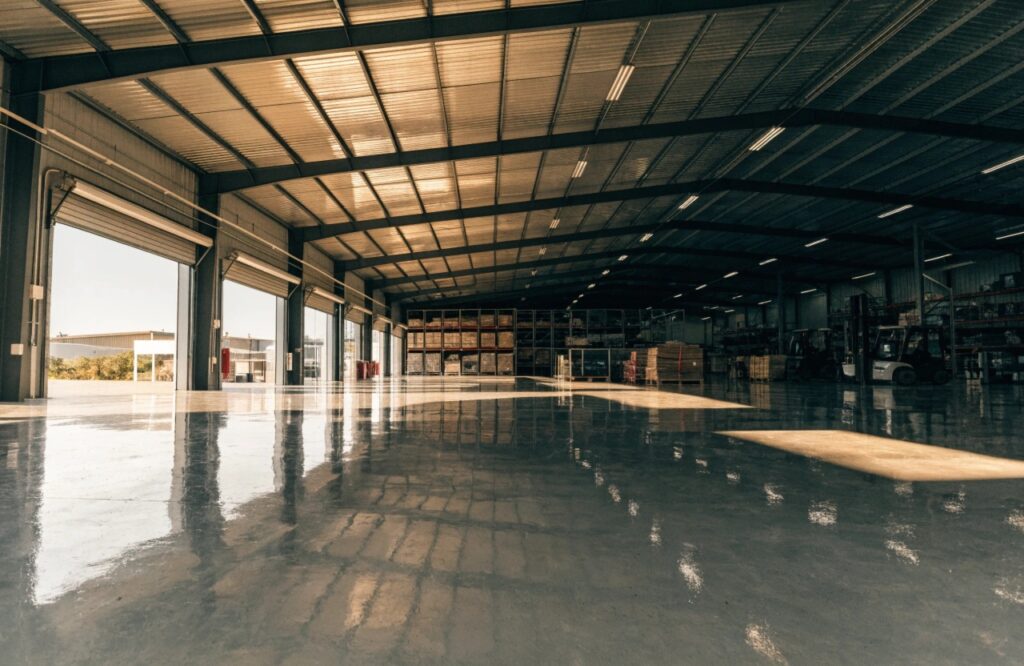
Heavy Traffic Epoxy Systems for Nambour Businesses
Not all epoxy is created equal. The system that works beautifully in a home garage will crack, chip, and wear out fast under the demands of a commercial environment. When you’ve got staff, vehicles, trolleys, and equipment moving across a floor every single day, you need something built for that reality.
Commercial epoxy systems are typically applied at 2–3mm thickness or more, compared to the 1mm or less you’d see in residential installs. That extra build creates a surface that can handle:
- Forklift and pallet jack traffic — common in warehouses and distribution centres
- Heavy foot traffic — retail floors, gyms, medical centres, and hospitality spaces
- Dropped tools and equipment — workshops and trade facilities around Nambour
- Chemical and oil exposure — automotive workshops, cleaning bays, industrial kitchens
The right system also starts with proper surface preparation. Commercial concrete gets diamond-ground to open the substrate, which gives the epoxy something to genuinely bond to. Skip that step and you’re looking at delamination — the floor peeling up in sheets, usually right when you can least afford the downtime.
For Nambour’s humid subtropical climate, moisture mitigation is part of the prep process too. Moisture vapour pushing up through the slab is one of the most common reasons commercial epoxy fails prematurely. A quality installer will test for this before they even open a tin.
Food Service and Health Department Compliance
If you’re running a café, restaurant, commercial kitchen, or food processing facility in Nambour, your floor isn’t just a cosmetic choice — it’s a compliance issue. Queensland Health and local council regulations have specific requirements for food preparation areas, and your flooring needs to tick those boxes.
Commercial epoxy, when specified correctly, can meet these requirements. Here’s what food service floors generally need to satisfy:
- Non-porous surface — no gaps, cracks, or joins where bacteria can hide
- Chemical resistance — able to withstand commercial cleaning agents and sanitisers used daily
- Seamless finish — coved skirting (where the floor curves up the wall) eliminates the join between floor and wall, which is a common hygiene trap
- Non-slip rating — wet kitchen floors are a safety hazard; the right epoxy system includes an anti-slip aggregate
Epoxy ticks all of these when it’s installed properly. The seamless, non-porous surface is actually one of its biggest advantages over tiles in a commercial kitchen — no grout lines collecting grease and bacteria.
Before installation, it’s worth checking the Queensland Health design and fit-out guide for food premises, as specifications can vary depending on your food licence class and the nature of your operation. A good commercial epoxy installer will be across these requirements too — if they’re not, that’s a red flag worth paying attention to.
Minimising Business Disruption During Installation
One of the biggest concerns business owners in Nambour have about getting a new floor is the downtime. And fair enough — every day your doors are closed is a day you’re not making money. The good news is that a professional commercial epoxy installer plans around your operation, not the other way around.
A standard commercial epoxy installation typically runs across two to three days, depending on the size of the space and the system being applied. Here’s a rough breakdown of how that usually looks:
| Day | Work Being Done |
| Day 1 | Surface grinding, crack repair, moisture testing, primer coat |
| Day 2 | Base coat and broadcast (if using flake or quartz) |
| Day 3 | Topcoat application and cure time begins |
Most systems are ready for foot traffic within 24 hours of the final coat, with full cure — meaning heavy vehicle traffic — reached at around 72 hours. That means a floor started on a Thursday night can often be back in full operation by Monday morning.
A lot of Nambour businesses schedule installation over a long weekend or during their quietest trading period. Some installers will also work in sections, keeping part of your floor operational while the rest is being done. It’s worth having that conversation upfront so the job gets scheduled in a way that actually works for your business.
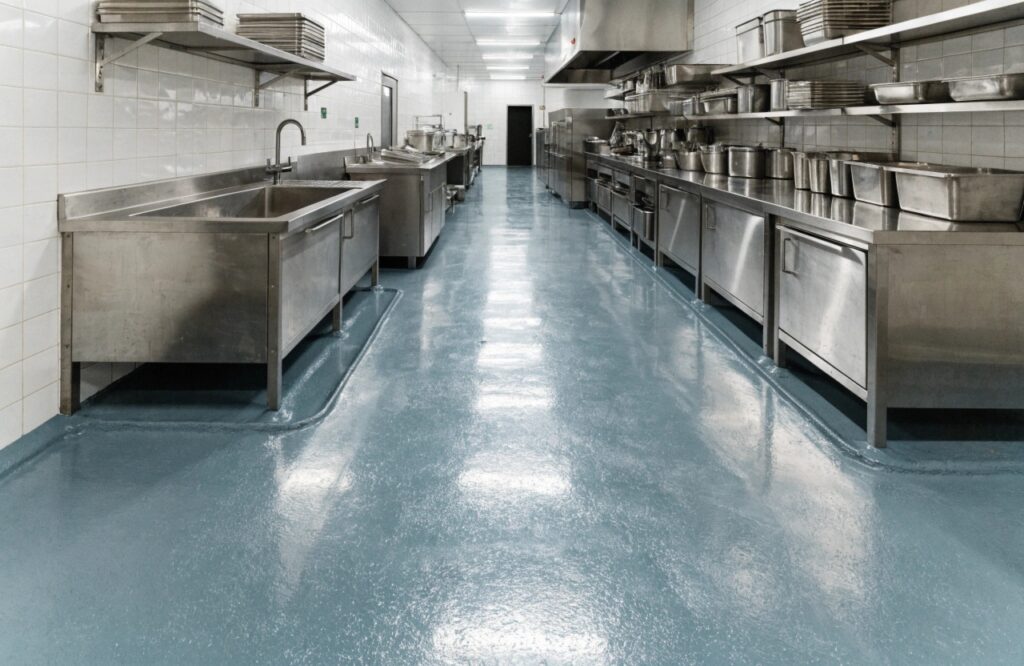
Commercial Epoxy Maintenance Programs
One of the reasons business owners choose epoxy over other flooring options is the low maintenance. But “low maintenance” doesn’t mean “no maintenance.” A proper care routine keeps a commercial floor looking sharp and extends its lifespan well beyond what a neglected floor would last.
For most Nambour commercial spaces, a basic maintenance program looks like this:
- Daily: Sweep or dust mop to remove grit and debris — this is the big one. Fine particles act like sandpaper underfoot and dull the surface over time
- Weekly: Mop with a pH-neutral cleaner diluted in warm water. Avoid bleach-based or acidic cleaners, which can break down the topcoat
- Annually: A professional inspection to check for any chips, worn patches, or areas where the coating has thinned — catching these early means a simple patch job rather than a full recoat
The beauty of epoxy in a commercial setting is that spills clean up fast. Oil, grease, chemicals — they sit on the surface rather than soaking in, so a quick wipe down is usually all it takes.
For high-traffic areas like loading docks or workshop floors, a maintenance recoat every five to seven years keeps the system performing at full capacity. That’s a fraction of the cost of a full reinstall, and it means your floor can realistically last twenty years or more with the right care.
Safety Requirements and Non-Slip Solutions
Workplace safety isn’t optional in Queensland. Under SafeWork Australia guidelines, employers have a duty to provide a safe working environment — and that includes the floor underfoot. A slippery floor in a commercial setting isn’t just a liability risk, it’s a real danger to your staff and customers.
The good news is that epoxy systems can be specified with non-slip properties built right in. There are a few ways this gets done:
- Broadcast aggregate — fine quartz or aluminium oxide particles are scattered into the wet topcoat before it cures, creating a grippy texture across the whole surface
- Anti-slip additive — mixed directly into the topcoat for a more subtle texture, common in retail and medical settings where aesthetics matter
- Coarse aggregate systems — used in high-risk areas like loading docks, ramps, and commercial kitchens where maximum grip is needed
The slip resistance of a floor is measured using a pendulum test rating, and different commercial environments have different requirements. A retail showroom and a commercial kitchen have very different needs, and a good installer will spec the right system for your specific use case.
It’s also worth noting that non-slip properties can be added during a maintenance recoat if your current floor isn’t meeting safety standards — you don’t always need to start from scratch.

ROI Analysis for Commercial Property Owners
Let’s talk numbers. Commercial epoxy flooring isn’t the cheapest line item on a fitout budget, but when you look at what you’re getting over the life of the floor, the value stacks up fast.
Here’s a rough cost comparison for a 200sqm commercial space in Nambour:
| Flooring Option | Install Cost (approx.) | Lifespan | Maintenance Cost (annual) |
| Commercial Epoxy | $8,000 – $14,000 | 15–20 years | Low |
| Vinyl Tiles | $6,000 – $10,000 | 8–10 years | Medium |
| Polished Concrete | $10,000 – $18,000 | 20+ years | Low–Medium |
| Ceramic Tiles | $7,000 – $12,000 | 10–15 years | High (grout maintenance) |
Epoxy sits in a competitive range on install cost, but where it pulls ahead is lifespan combined with minimal ongoing maintenance. No grout lines to scrub, no tiles cracking under heavy equipment, no vinyl lifting at the edges.
For commercial property owners, a quality floor also adds tangible value to the asset. Tenants notice it, buyers notice it, and it signals that the property has been maintained properly.
The bottom line? A commercial epoxy floor in Nambour typically pays for itself within three to five years when you factor in reduced cleaning time, fewer repairs, and the avoided cost of replacing a cheaper floor that didn’t last.
Ready to Upgrade Your Nambour Business Floor?
If your current floor is holding your business back — whether it’s the look, the safety, or the maintenance headache — commercial epoxy flooring is worth a serious look. It’s a long-term investment that works harder than most flooring options on the market, and when it’s installed right, it shows.
Get in touch with a local Nambour epoxy specialist today for a site inspection and quote tailored to your space and your budget.


Comments (0)