
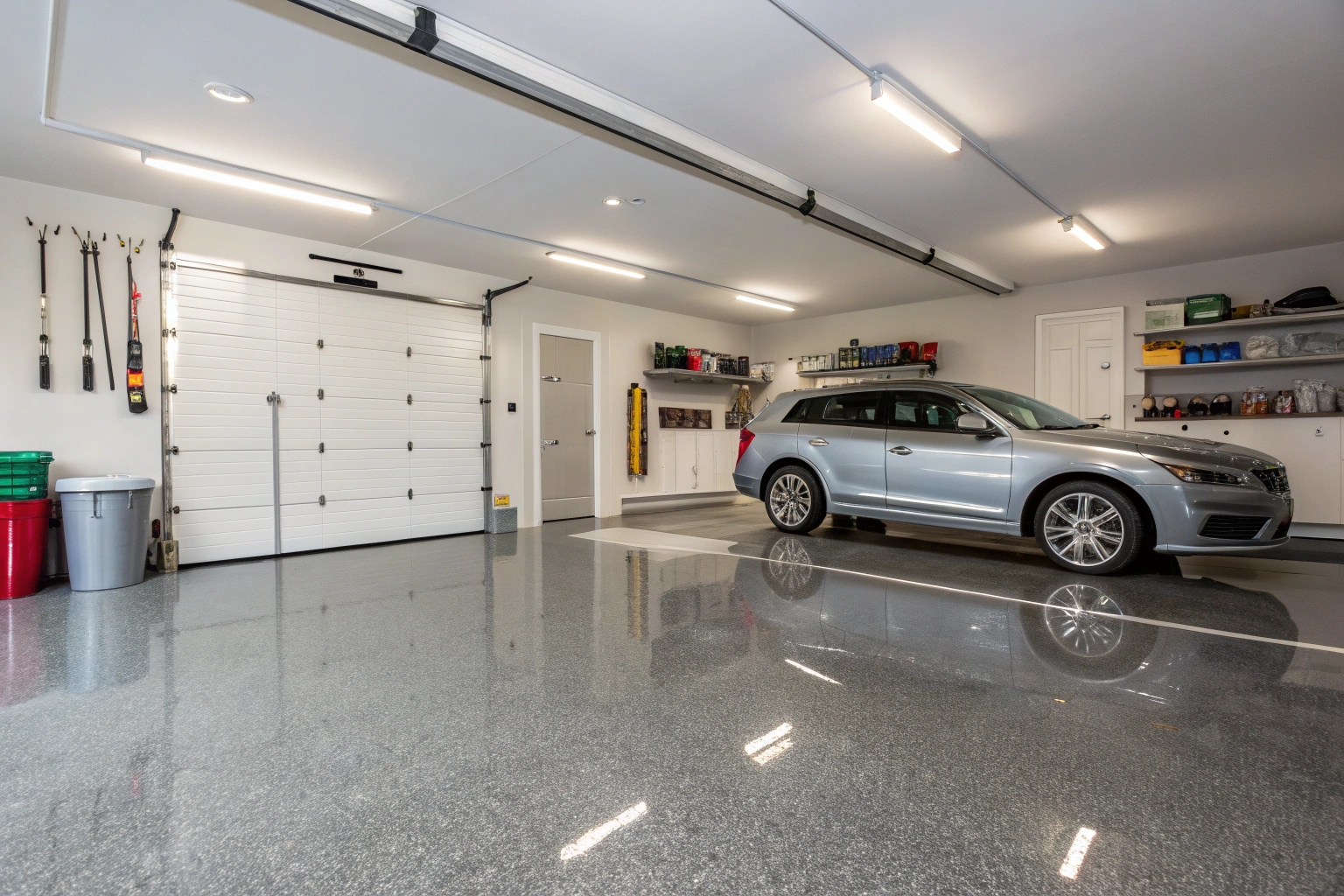
Property Value Benefits: Garage Floor Upgrades in Battery Hill
Garage floor restoration delivers a measurable return on investment during property sales in Battery Hill’s competitive, established suburb market. Real estate professionals identify garages as critical inspection points where visible concrete deterioration signals broader maintenance neglect to potential buyers. Professional epoxy finishes create positive first impressions that influence purchase decisions and price negotiations.
The investment-to-impact ratio favours garage upgrades compared to larger renovation expenditures. A standard double garage epoxy installation costs significantly less than kitchen or bathroom updates while providinga comparable visual transformation. Buyers touring multiple Battery Hill properties remember homes with modern, clean garage spaces, particularly when comparing against dated concrete floors showing typical deterioration patterns.
Properties featuring garage upgrades typically spend fewer days on the market, attracting renovation-adverse buyers seeking move-in-ready homes. The showroom appearance positions properties within higher price brackets during appraisals. Sellers recoup epoxy investment costs through faster sales and reduced price negotiation pressure, with garage condition influencing overall property presentation scores that affect buyer perception and willingness to meet asking prices.

Epoxy Flooring Solutions for Dated Concrete Garages
Epoxy coating systems address multiple deterioration issues simultaneously in older concrete garages. The process begins with surface preparation—grinding away damaged concrete layers, filling cracks with structural repair compounds, and removing embedded contaminants like oil stains that prevent adhesion. This preparation phase restores substrate integrity before coating application.
Modern epoxy systems create a sealed barrier that prevents moisture penetration, eliminating the progressive spalling common in Battery Hill’s coastal climate. The coating bonds mechanically to prepared concrete, creating a surface resistant to hot tyre pickup, chemical spills, and impact damage from dropped tools or equipment.
Three primary system types suit renovation projects: 100% solids epoxy for maximum durability in high-use garages, water-based epoxy for budget-conscious applications, and flake broadcast systems that mask existing concrete imperfections while providing texture. Each system transforms appearance while extending concrete lifespan by decades compared to unsealed surfaces that continue deteriorating through moisture absorption and surface erosion.
Modern Colour Trends for Established Suburb Garages
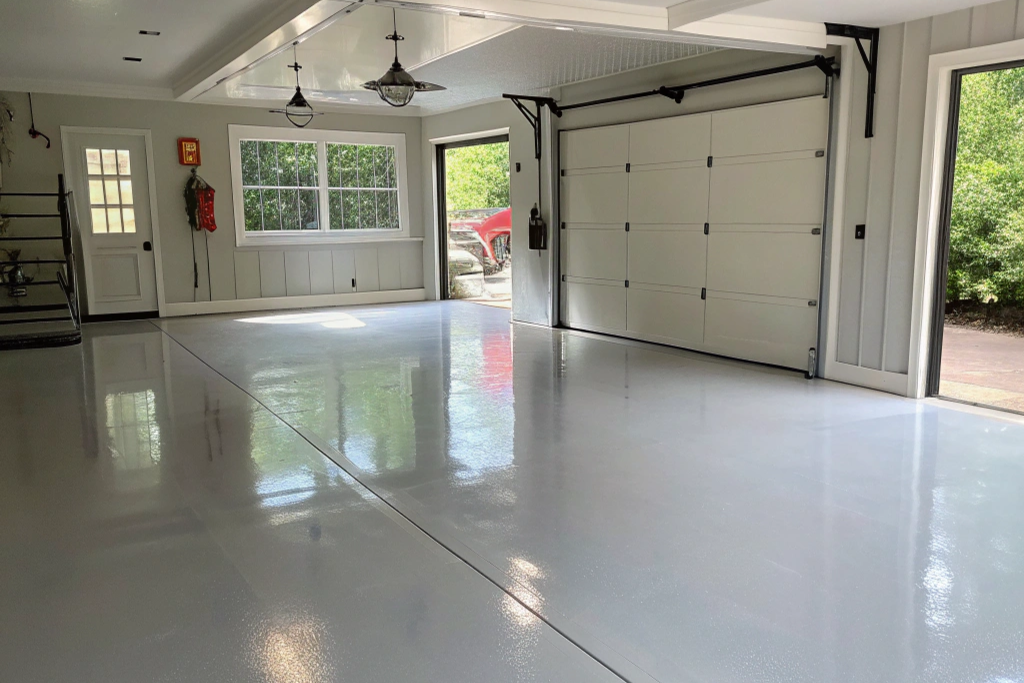
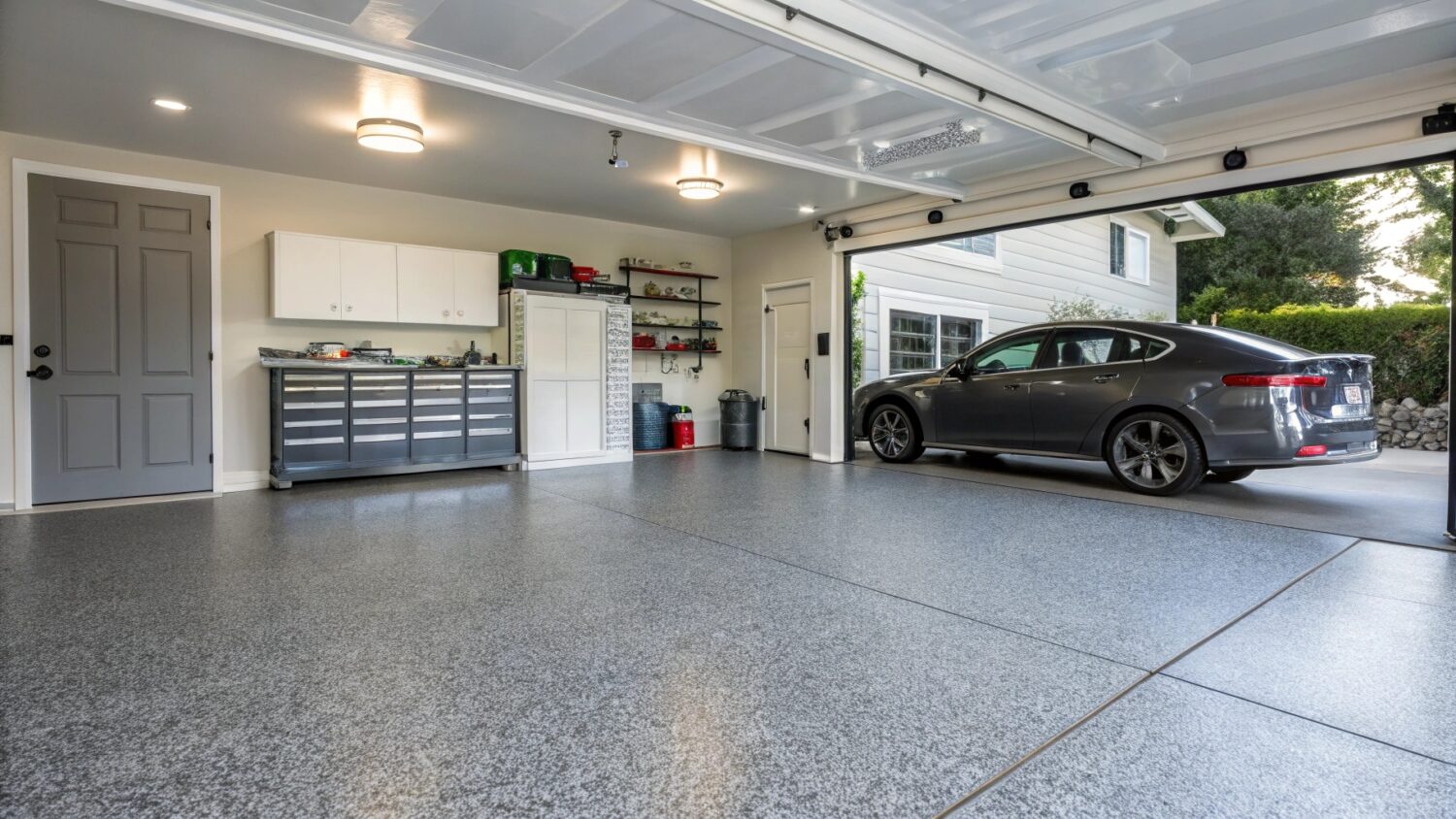
Contemporary epoxy colour selections complement Battery Hill’s established home aesthetics while modernising dated garage spaces. Neutral tones dominate renovation projects—light grey, concrete grey, and beige systems integrate seamlessly with existing home exteriors without appearing jarring against traditional colour palettes common in 1980s-2000s construction.
Darker charcoal and slate grey options provide practical benefits for high-traffic garages, effectively concealing tyre marks and minor surface wear between cleaning intervals. These colours suit households prioritising low-maintenance solutions during renovation phases.
Flake broadcast systems offer textured visual interest through colour combinations:
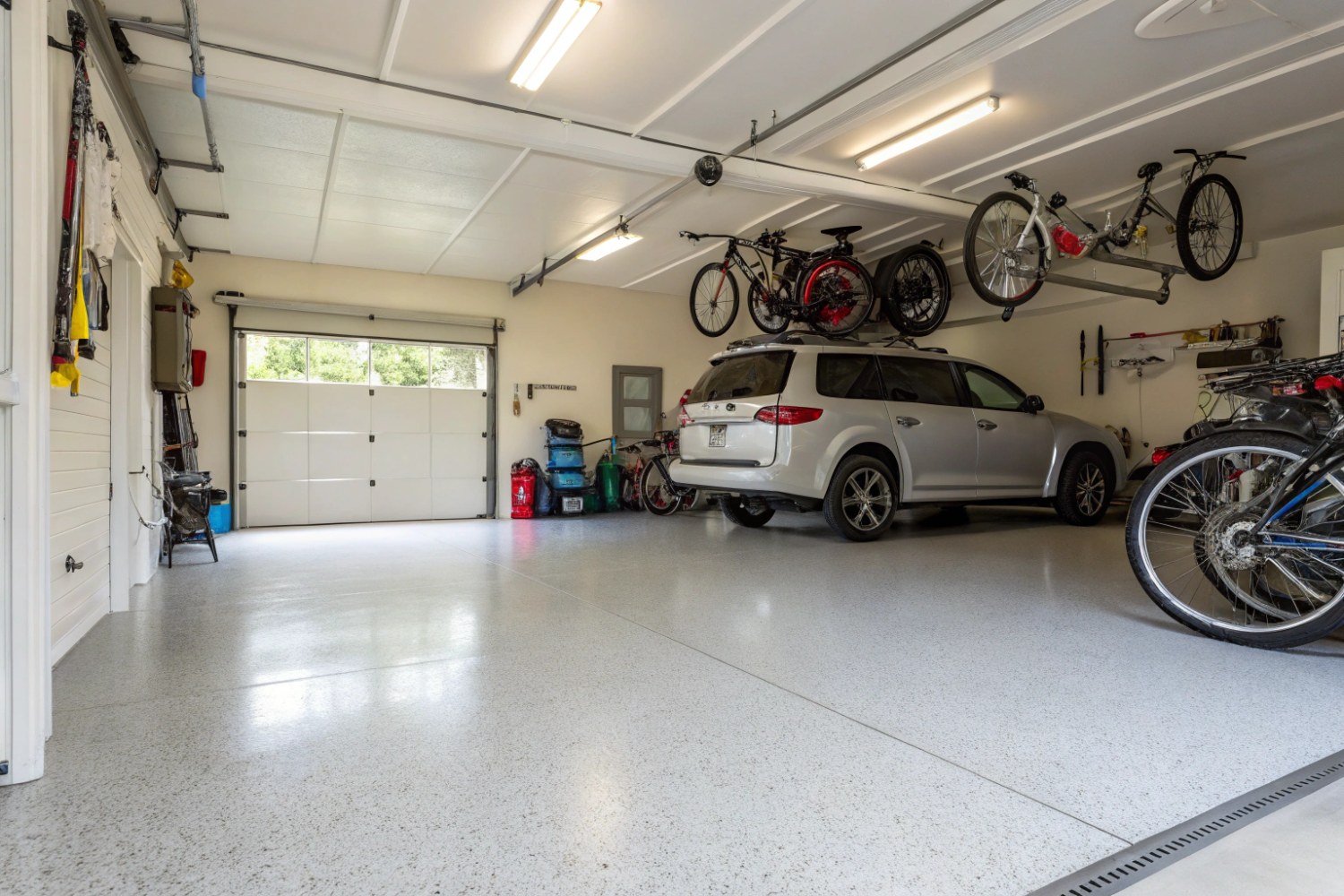
- Grey base with black/white flakes – timeless appearance
- Tan base with brown/beige flakes – warm, inviting aesthetic
- Light grey with silver flakes – contemporary, reflective finish
Colour selection influences perceived garage size, with lighter tones enhancing natural light reflection in single garages typical of Battery Hill’s older housing stock.

Common Garage Floor Problems in Battery Hill Homes
Battery Hill’s concrete garages exhibit predictable deterioration patterns reflecting the suburb’s housing age and coastal proximity. Homeowners undertaking renovations encounter similar surface damage requiring restoration before aesthetic upgrades can proceed effectively.
Typical concrete issues include:
- Surface spalling – concrete flaking from moisture penetration and salt air exposure
- Oil staining – decades of vehicle fluid absorption creating permanent discolouration
- Structural cracking – settlement cracks from reactive clay soils are common in the region
- Dusting surfaces – powdery concrete from inadequate original curing or wear
- Tyre marks – rubber deposits embedded in porous concrete surfaces
These problems accelerate without intervention. Moisture enters through surface cracks, causing progressive deterioration that spreads beneath intact-looking concrete. Oil contamination prevents effective sealing with traditional products, trapping moisture and accelerating damage cycles. Homes built during Battery Hill’s major development phases between 1985 and 2005 now reach the point where concrete surfaces require comprehensive restoration rather than cosmetic patching.
Battery Hill Garage Renovation: Epoxy vs Traditional Garage Paint
Epoxy Flooring Systems
Professional epoxy applications penetrate prepared concrete substrates, creating mechanical bonds that withstand thermal cycling, moisture exposure, and chemical contact common in garage environments. The coating thickness ranges from 300 to 500 microns, providing substantial protection against impact damage and abrasion from vehicle traffic. Proper surface preparation removes contaminants and opens concrete pores, ensuring adhesion strength that prevents peeling or delamination under hot tyre contact.
System longevity extends 10-15 years in residential garages with minimal maintenance requirements beyond periodic cleaning. The seamless surface eliminates dirt accumulation in concrete pores, making oil spill cleanup straightforward with standard degreasers. Chemical resistance protects against battery acid, brake fluid, and cleaning products that damage unsealed concrete. Impact-resistant handles dropped tools and equipment without chipping, maintaining appearance throughout renovation projects and beyond.
Traditional Garage Paint
Garage floor paints create thin film coatings measuring 50-100 microns that sit atop concrete surfaces rather than bonding mechanically to substrates. Application over unprepared or contaminated concrete results in adhesion failures visible within months as hot tyres lift paint films, particularly during summer heat. DIY applications often skip essential surface preparation steps, accelerating coating breakdown.
Paint longevity rarely exceeds 2-3 years before requiring recoating, with high-traffic areas showing wear patterns within 12 months. The porous coating absorbs oil and chemical spills, creating permanent staining that penetrates through to the concrete beneath. Recoating requires complete removal of failed paint—a labour-intensive process—before applying fresh coatings. Battery Hill homeowners choosing paint for budget reasons frequently spend more in the long term through repeated application cycles compared to single epoxy installations.
Installation Timeline for Minimal Family Disruption
Standard residential garage epoxy installations in Battery Hill are complete within 1-2 days, accommodating renovation schedules without extended access restrictions. The process begins with concrete preparation—grinding, crack repair, and cleaning—typically requiring 4-6 hours depending on surface condition. Concrete must reach optimal moisture levels before coating application proceeds.
Epoxy application follows preparation, with base coat and decorative flake broadcast completed within 3-4 hours. Topcoat application occurs after appropriate cure intervals, adding 2-3 hours to project duration. Full vehicle traffic resumes after 72 hours curing, though foot traffic becomes safe within 24 hours.
Homeowners coordinate installations around renovation phases, scheduling epoxy work after wall painting and storage organisation, but before final property staging. Garages remain accessible for storage during curing periods, minimising disruption to families living onsite throughout broader property improvement projects. Alternative vehicle parking arrangements span only 3 days maximum.
Frequently Asked Questions
Epoxy systems specifically address deteriorated concrete common in Battery Hill’s 1980s-2000s housing stock. Professional preparation removes damaged surface layers, repairs structural cracks, and neutralises oil contamination. Properly prepared older concrete accepts epoxy coatings effectively, providing superior performance compared to attempting paint applications over compromised substrates.
Metallic epoxy systems with UV-stable polyurethane topcoats provide both aesthetic appeal and maximum protection for prestige vehicles. The seamless, non-porous surface prevents concrete dust from settling on vehicle paint—a common issue with unsealed concrete that damages clear coats over time. The chemical-resistant topcoat protects against oil drips, brake fluid, and other automotive fluids that permanently stain standard concrete.
Yes, but proper crack repair is essential for long-term performance. We assess every property for crack severity and underlying causes. Surface cracks from shrinkage or minor settling are routinely repaired using flexible polyurea fillers that accommodate ongoing movement. More serious structural cracks may require concrete grinding and reconstruction before coating. The advantage of professional installation is a comprehensive assessment—we identify problems that DIY approaches miss, preventing premature coating failure.
Professional epoxy provides 10-15 year performance versus 2-3 years for DIY paint. Proper surface preparation equipment—concrete grinders, diamond tooling, industrial vacuums—ensures adhesion that prevents hot tyre pickup and peeling. Battery Hill’s coastal moisture accelerates paint failures on improperly prepared concrete, making professional applications cost-effective long-term.
Quality epoxy systems resist moisture penetration and salt air exposure affecting Battery Hill properties. The sealed surface prevents concrete spalling from coastal humidity while resisting chemical damage. Topcoat UV stabilisers prevent yellowing from sunlight exposure in garages with windows or open doors common in established suburb homes.
Top sights in Battery Hill
