
If you've ever walked into a workshop, café kitchen, or retail space and thought "wow,…
How Long Does Epoxy Garage Flooring Last on Sunshine Coast?
Marcus had been putting off his garage floor for three years. Every time he’d walk past the cracking, salt-stained concrete in his Mooloolaba home, he’d tell himself “next month.” When he finally called us, his first question wasn’t about colour or finish — it was “is this actually gonna last, or am I throwing money at something that’ll look ordinary again in two years?” Honestly? It’s the most common thing we hear.
Living on the Sunshine Coast means your home deals with conditions most of Australia never has to think about. Salt air off the water, humidity that hangs around like an unwanted houseguest, UV that fades and breaks down surfaces faster than you’d expect. So when someone’s dropping a few thousand dollars on an epoxy garage floor, they deserve a straight answer on how long it’s actually going to hold up — not a sales pitch, just the truth.
How Long Does Epoxy Garage Flooring Last on the Sunshine Coast?
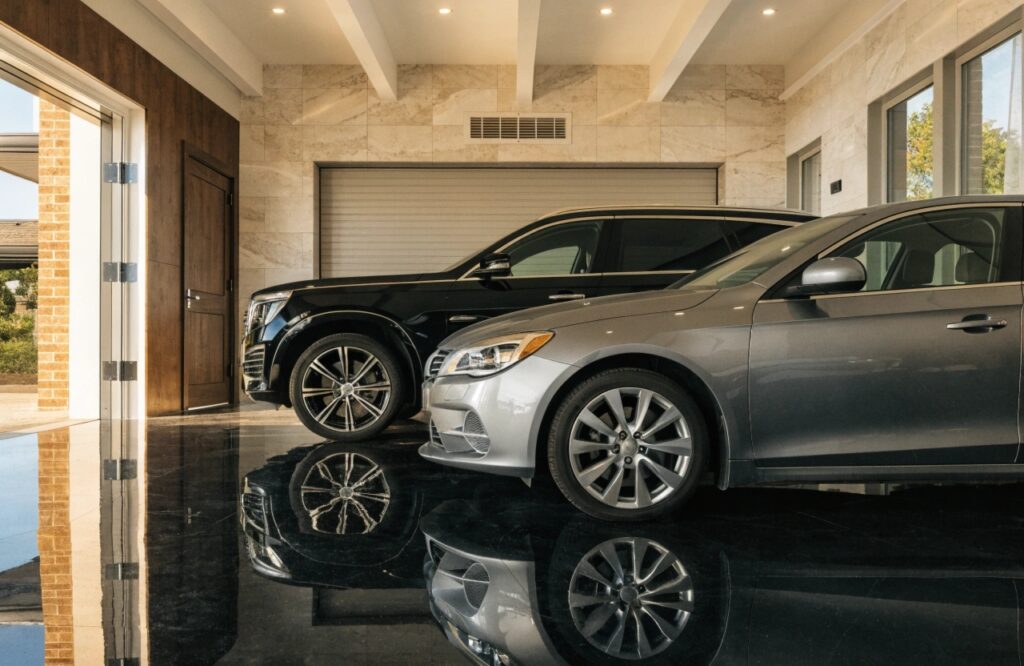
A properly installed epoxy garage floor on the Sunshine Coast will last anywhere from 10 to 20 years. Some push well past that. The baseline for most residential systems sits around 10-15 years with normal use. Step up to a premium multi-layer system with a UV-stable topcoat and you’re looking at 15-20 years or more. The difference comes down to three things: coating thickness, surface preparation, and whether a UV-stable topcoat was used. On the Sunshine Coast specifically, a floor that’d last 18 years in suburban Brisbane might hit the 12-14 year mark here without the right product selection. That’s just the reality of living near the water.
What Affects Epoxy Flooring Lifespan in Coastal Queensland?
The Sunshine Coast isn’t just a pretty backdrop — it’s an active force working on every surface of your home. Here’s what’s actually shortening or extending the life of a coating in this part of the world:
- Salt Air Exposure — properties within 5km of the coastline see corrosive salt particles ground in by foot traffic and tyres over time
- Humidity and Moisture Cycling — averaging around 70% relative humidity, the constant moisture movement stresses the bond between slab and coating; proper moisture testing against AS 1884 standards is non-negotiable
- UV Radiation — Queensland UV is brutal even inside a garage with the door open half the day; non-UV-stable systems yellow and chalk within a few years
- Traffic Load — a home workshop running heavy equipment ages a floor differently than two parked family cars
- Installation Quality — the slab must be diamond-ground to a CSP 2-3 profile on the ICRI scale; no product quality covers poor prep work
Real-World Examples: 10+ Year Old Epoxy Floors on the Coast
A home in Buderim we coated back in 2013 still has its original floor in solid condition today. Two cars, a ride-on mower, and a decade-plus of Queensland summers — no delamination, no peeling, no cracking. In Caloundra, a property 800 metres from the waterfront has an epoxy floor sitting at 11 years old. The owners had a previous coating done by someone else that started peeling within 18 months. Proper moisture testing and a UV-stable topcoat made all the difference the second time around.
The floors that don’t make it to 10 years are almost always single-coat systems, DIY applications, or jobs where corners got cut on prep. The Sunshine Coast environment finds every weakness.
Comparing Epoxy Lifespan vs. Other Garage Floor Options
| Floor Option | Lifespan (Coastal QLD) | Maintenance | Coastal Suitability |
| Professional Epoxy (multi-layer) | 15-20+ years | Low | Excellent |
| Single-coat DIY Epoxy | 2-5 years | Medium | Poor |
| Concrete Sealer | 2-4 years | High | Poor |
| Polyurea/Polyaspartic | 15-20+ years | Low | Excellent |
| Plain Concrete (unsealed) | Degrades continuously | Very High | Very Poor |
| Interlocking Floor Tiles | 8-12 years | Medium | Moderate |
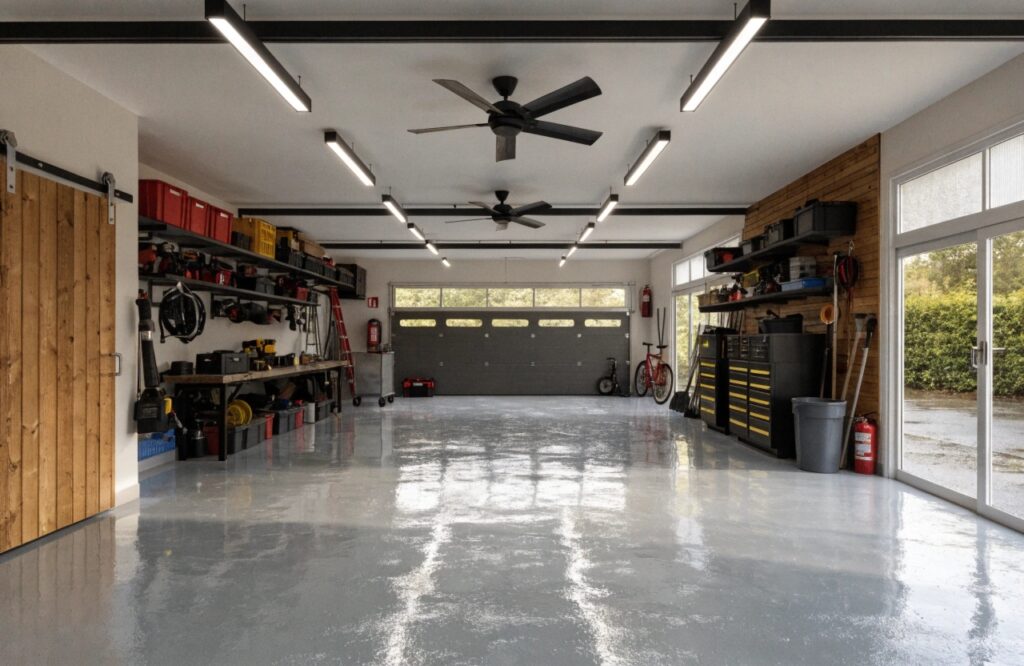
Plain concrete doesn’t have a lifespan — it just deteriorates. Concrete sealers need reapplying every 2-3 years, and over 15 years you’ve spent more than a professional epoxy job with worse results. Polyaspartic systems actually outperform standard epoxy on UV resistance and are worth serious consideration for homes close to the waterfront.
How to Maximise Your Epoxy Floor’s Lifespan
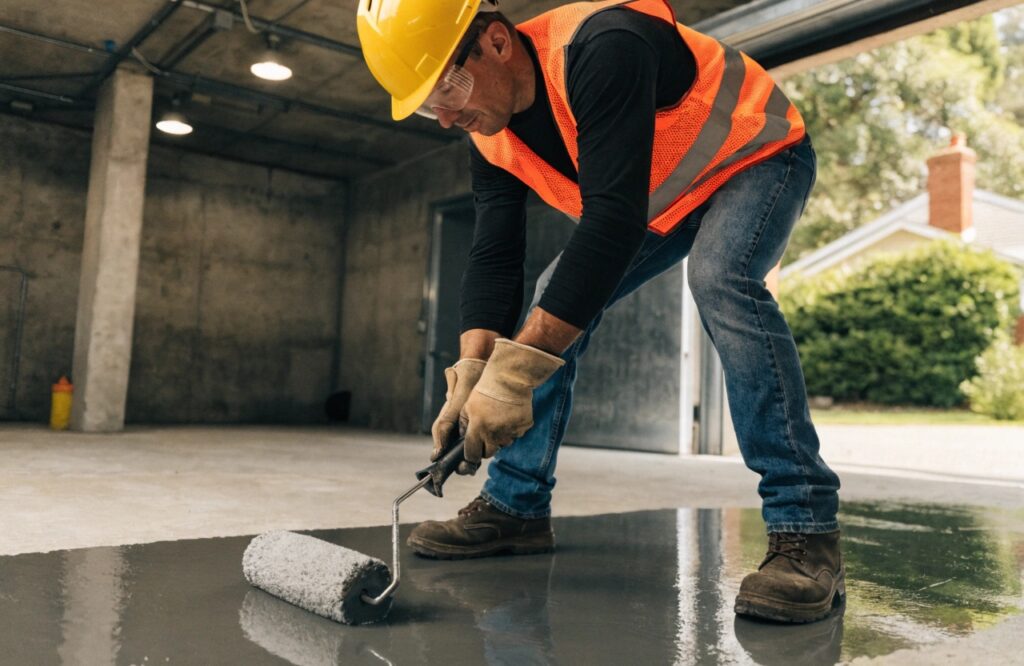
- Use pH-neutral cleaners — bleach and ammonia-based products break down topcoats over time
- Put mats under vehicles — hot tyre pickup is real in Queensland summers
- Deal with spills quickly — oil, battery acid, and brake fluid left sitting shorten lifespan fast
- Avoid dragging sharp or heavy objects — rubber feet and furniture pads are cheap insurance
- Get a professional inspection every few years — catching edge lift early means a topcoat refresh, not a full recoat
Warning Signs Your Epoxy Floor Needs Attention
- Yellowing or chalking — UV degradation at topcoat level
- Edge lifting — moisture getting under the coating at perimeter joins
- Deep surface scratches — wear through the topcoat into the base coat
- Bubbling or blistering — usually a moisture issue from below the slab
- Dull patches — topcoat sheen loss in high-traffic zones
Maintenance Schedule for 15+ Year Performance
| Frequency | Task |
| Weekly | Sweep or blow out dust and debris |
| Monthly | Mop with pH-neutral cleaner and warm water |
| Every 6 months | Check edges and perimeter for lifting |
| Every 2-3 years | Professional inspection and topcoat assessment |
| As needed | Spot treat oil or chemical spills immediately |
Ready for a Floor That Lasts?
If you’re looking at your garage floor and wondering whether it’s worth the investment — it is, when it’s done properly. A professionally installed, multi-layer epoxy system built for coastal Queensland conditions will outlast paint, sealers, and bare concrete by years. Get in touch with our team for a free quote and honest advice on what your garage actually needs. No pressure, no runaround — just straight talk from people who’ve been doing this on the Sunshine Coast for a long time.

