
If you've ever walked into a workshop, café kitchen, or retail space and thought "wow,…
Essential Epoxy Floor Maintenance Guide for Buderim Homeowners
Last updated: May 2026
Your Buderim garage floor looked great the day it was installed. Now you’re noticing dull patches, a few scuff marks, and maybe some grit that just won’t sweep away cleanly. Sound familiar?
Here’s the thing — epoxy floors are one of the lowest-maintenance flooring systems you can choose. But “low maintenance” doesn’t mean “no maintenance.” A simple routine, the right products, and a basic understanding of what coastal Sunshine Coast conditions do to your floor is all it takes to keep it performing like new for 10, 15, even 20 years.
This guide covers everything Buderim homeowners need to know — from daily cleaning habits to seasonal protection strategies, which products to use (and which ones to never go near), and how to spot the early signs of wear before they turn into expensive repair jobs.
Whether your epoxy floor is in the garage, rumpus room, or outdoor entertaining area, the advice here applies. Let’s start with the basics.
Jump to a section:
- Daily and Weekly Cleaning Routines
- Coastal Environment Protection Strategies
- Products to Use and Avoid on Epoxy Floors
- Seasonal Maintenance for Sunshine Coast Conditions
- Troubleshooting Common Epoxy Floor Issues
- When to Call Professionals for Repairs
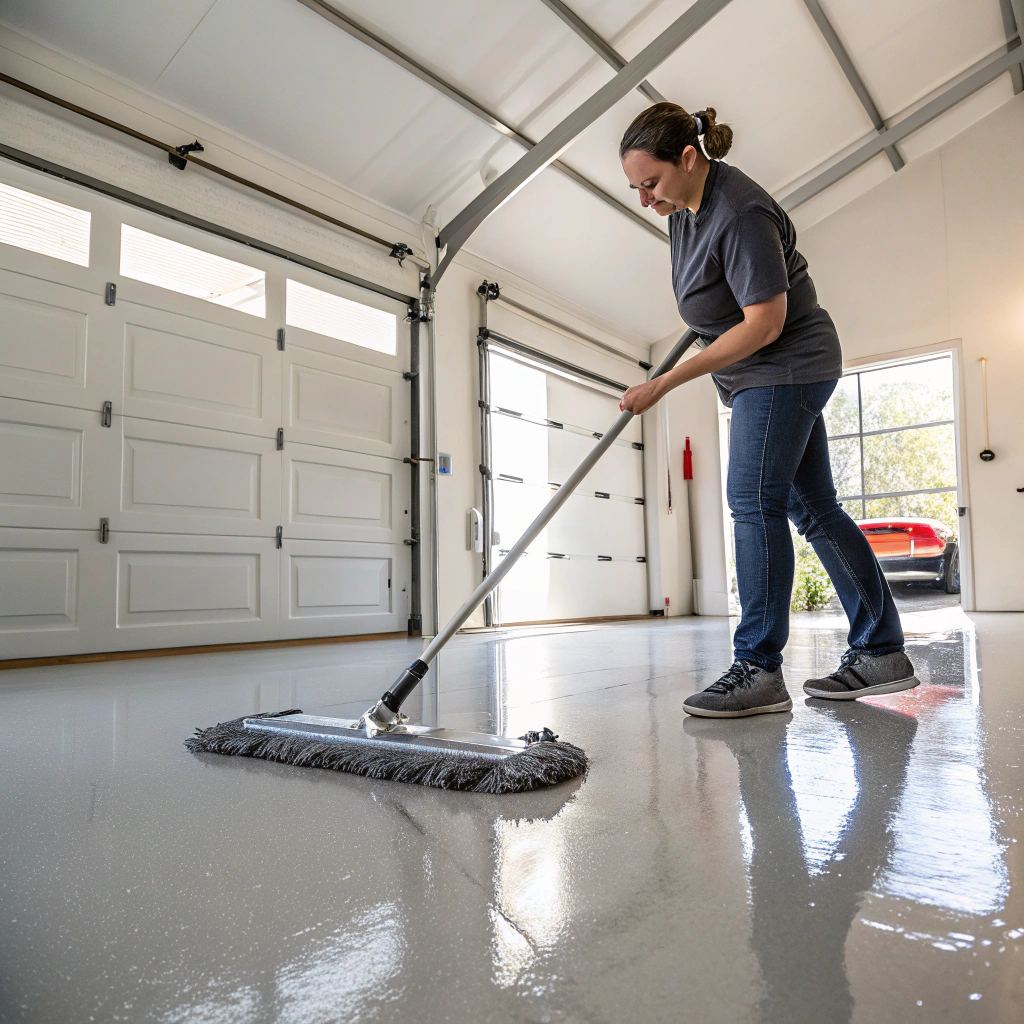
How to Clean an Epoxy Floor: The Right Way
Cleaning an epoxy floor correctly takes less than 10 minutes a day and protects your investment for decades. Here’s the best approach for Buderim homeowners dealing with dust, humidity, and coastal grime:
Daily:
- Sweep or dust-mop with a soft-bristle broom or microfibre mop to remove grit before it scratches the surface
Weekly:
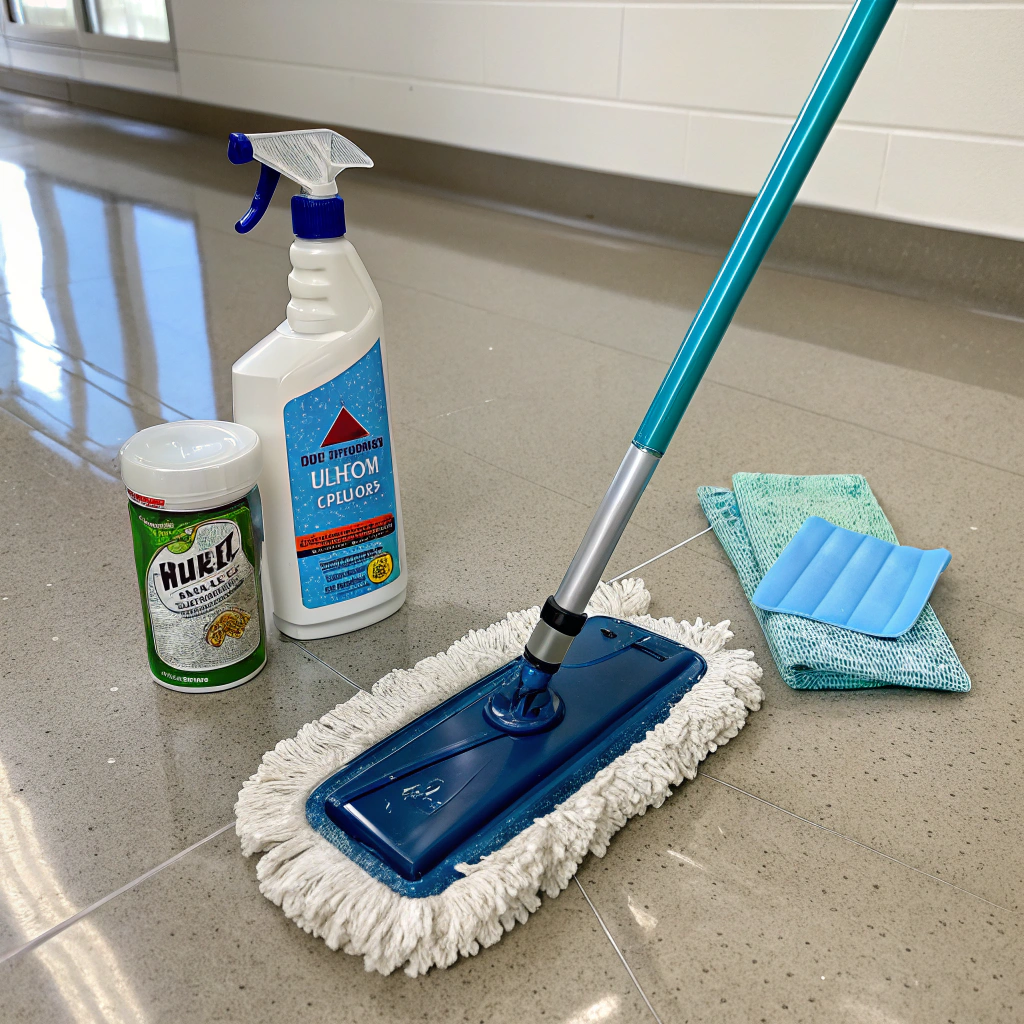
- Mop with warm water and a pH-neutral cleaner — mild dish soap works fine
- Use a microfibre mop head only; avoid string mops that leave residue
For stubborn stains:
- Scrub gently with a soft nylon brush in a circular motion
- For oil or tyre marks, apply a citrus-free degreaser and wipe clean immediately
Never use: vinegar, bleach, citrus-based cleaners, or abrasive scrubbing pads — these degrade epoxy gloss over time.
Daily and Weekly Cleaning Routines
Most epoxy floors don’t fail because of poor installation. They fail because of what happens in the years after. The good news is the right routine takes almost no time.
Daily Habits That Take Under 5 Minutes
Grab a soft-bristle broom or microfibre dust mop and do a quick sweep. Sand and grit tracked in from the driveway are the number one enemy of epoxy gloss — especially in coastal Buderim, where fine particles act like sandpaper underfoot over time. Wipe up spills straight away. Don’t let them sit.
Weekly Mopping Done Right
Warm water and a pH-neutral cleaner — mild dish soap works fine. Use a microfibre mop head, not a string mop. String mops leave a residue film that builds up and dulls the surface. If the floor still feels gritty after mopping, work a soft nylon brush over problem areas.
Coastal Environment Protection Strategies
Buderim sits close enough to the coast that salt air, humidity, and storm moisture are real factors in how your epoxy floor performs over time. Most generic maintenance guides miss this entirely.
- Salt air accelerates surface dullness if floors aren’t cleaned regularly — the residue settles invisibly and builds up between cleans
- Humidity and condensation can work into unsealed edges and expansion joints over time, weakening the bond at the perimeter
- Before a storm, clear the garage floor of any items sitting directly on the surface. After heavy rain, dry the floor as soon as possible — don’t leave standing water
- Buderim garages need more frequent cleaning cycles than inland properties — weekly rather than fortnightly is the right call
- Ventilation matters more than most homeowners realise. Keeping air moving under and around parked vehicles reduces moisture buildup significantly
A quick local example: A Buderim homeowner came to us after noticing their 4-year-old epoxy garage floor had lost its gloss well ahead of schedule. Turns out they’d been using a citrus-based cleaner — thinking it was a safe, natural option — which had been chemically stripping the topcoat with every clean. A professional topcoat refresh and a switch to a pH-neutral routine got the floor back to original condition. They’re now on a simple 10-minute weekly clean and haven’t looked back.
Products to Use and Avoid on Epoxy Floors
| ✅ Use These | ❌ Never Use These |
|---|---|
| pH-neutral floor cleaner | Vinegar or citrus-based cleaners |
| Mild dish soap (diluted) | Bleach or ammonia products |
| Microfibre mop | Steel wool or abrasive pads |
| Citrus-free degreaser | Soap-based cleaners (leaves film) |
| Warm water | High-pressure hose directly on surface |
Acidic and abrasive products don’t just leave marks — they chemically break down the epoxy topcoat at a molecular level. Over time that means dulled gloss, reduced slip resistance, and a surface that’s far more vulnerable to staining and physical damage. For coastal homeowners already dealing with salt air and humidity, using the wrong cleaner accelerates that process considerably. Stick to the left column and your floor will look after itself.
Seasonal Maintenance for Sunshine Coast Conditions
Summer — Heat, UV and Storm Season
Outdoor epoxy areas — pool decks, patios, entertaining spaces — cop the most punishment over summer. Prolonged UV exposure can fade and chalk the surface on coatings that aren’t rated for direct sunlight, so check yours is UV-stable and inspect it at the start of each season.
Before a storm, make sure drainage around the garage entry is flowing freely and clear anything sitting on the floor. After heavy rain, dry the floor down as soon as you can. With increased traffic over the holidays, keep the weekly clean consistent.
Winter — Cooler Temps and Morning Condensation
Sunshine Coast winters are mild, but morning condensation is real. Tyres tracking moisture onto a cool floor leave watermarks that dry into a hazy film. A quick morning wipe manages it easily.
Fortnightly mopping is usually fine over winter when traffic is low. Use the quieter period to check expansion joints for cracking or separation before the wet season returns.
Troubleshooting Common Epoxy Floor Issues
Even with the best routine, issues can still appear. Here’s how to read what your floor is telling you.
- Dull or hazy finish — Cause: soap residue buildup / Fix: clean with plain warm water and a microfibre mop, no cleaner
- Surface scratches — Cause: grit left too long on the surface / Fix: light buff with an approved polish; prevent by sweeping daily
- Peeling or bubbling — Cause: moisture trapped at installation or chemical damage / Fix: professional assessment required — don’t attempt a DIY patch
- Tyre marks — Cause: hot tyre pickup on certain topcoats / Fix: citrus-free degreaser wiped clean immediately; rubber mats at the entry help prevent it
- Staining near edges — Cause: unsealed perimeter joints / Fix: reseal joints and improve drainage routing around the garage entry
When to Call Professionals for Repairs
Not every epoxy floor issue is a DIY fix. Here’s how to tell the difference between what you can handle yourself and what needs a qualified applicator.
Signs it’s time to call a professional:
- Peeling or delamination covering more than a 30cm area
- Visible cracking in the substrate beneath the coating
- Persistent moisture or efflorescence coming through the floor
- Chemical staining that won’t lift with approved cleaners
- Floor is over 10 years old and showing widespread gloss loss
If you’re unsure, an inspection is always the safer call. A qualified applicator can tell you within minutes whether you’re looking at a simple maintenance fix or something that needs proper attention. Catching issues early is almost always cheaper than waiting.
For safety-related concerns — particularly on wet areas and pool decks — floors should meet the slip resistance requirements outlined in AS/NZS 4586. A professional can assess this as part of any inspection.
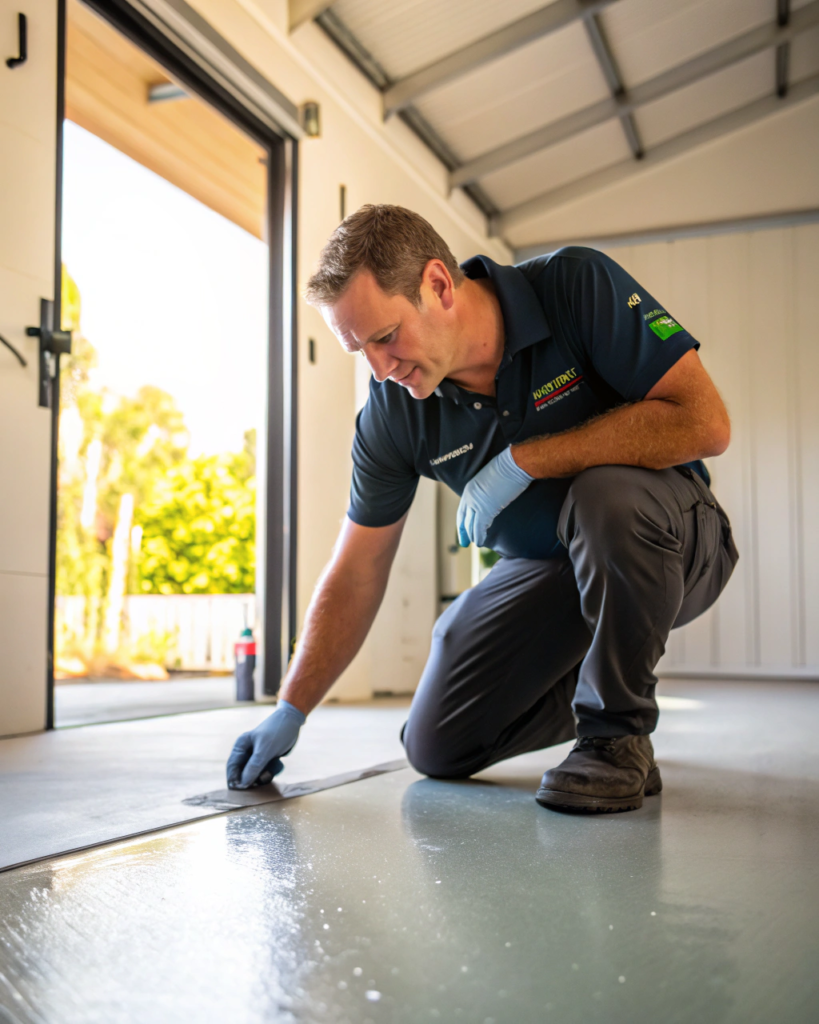
Is Your Buderim Epoxy Floor Due for a Professional Check?
Most floors only need a quick inspection every 2-3 years. Book a free assessment with our Sunshine Coast team and we’ll tell you exactly where you stand — no obligation, no sales pressure.
Here’s how it works:
- You call or submit the form
- We ask a few quick questions about your floor
- We schedule a free on-site assessment at a time that suits you
- You get a clear, written recommendation — repair, maintenance plan, or nothing needed
Sunshine Coast Garage & Epoxy Floors 📞 0741 586 001 Serving Buderim and the Sunshine Coast region

