
If you've ever walked into a workshop, café kitchen, or retail space and thought "wow,…
Epoxy Garage Flooring Moisture Problems
My mate Brendan had his garage floor epoxy done by a bloke he found online. Looked amazing for about three weeks. Then the bubbling started. By month two, whole sections were peeling up like sunburnt skin after a day at Mooloolaba. The contractor blamed Brendan. Brendan blamed the contractor. Nobody mentioned the real culprit — moisture sitting in that concrete slab, just waiting to wreck everything.
If you’re living on the Sunshine Coast and thinking about epoxy for your garage, moisture is the conversation you need to have before you spend a single dollar. This isn’t the kind of thing most contractors will bring up unprompted, but it’s the difference between a floor that lasts 20 years and one that turns into an expensive mess inside a season.
Why Moisture Is Epoxy Flooring’s Biggest Enemy on the Coast
Epoxy bonds to concrete mechanically — it grips into the surface and cures into a hard, sealed layer. The problem is that bond only works when the concrete is dry. When moisture’s present, either sitting in the slab or rising up from underneath, the epoxy can’t get a proper hold. It looks fine at first. Then the pressure from water vapour pushing through the slab starts lifting it from below, and that’s when you get bubbling, delamination, or full sections peeling away.
On the Sunshine Coast, this is a bigger issue than most of the country. High humidity, coastal groundwater, and the way our slabs are built mean moisture is almost always a factor. It’s not a rare edge case — it’s the norm.
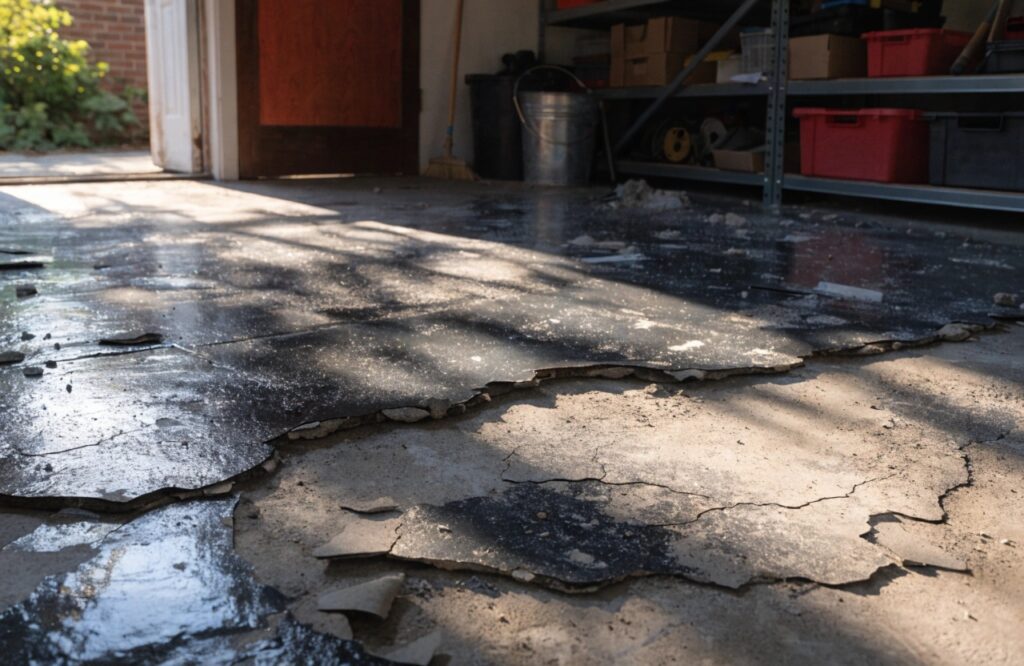
Signs Your Garage Has Moisture Problems
Before you call anyone for a quote, walk out to your garage and look for these:
- White powdery residue on the concrete — this is efflorescence, and it means moisture is moving through the slab
- Dark patches that appear after rain, especially around the edges of the floor
- A musty smell, even when the garage has been open for a while
- Existing paint or coating that’s flaking or bubbling — that’s moisture doing exactly what it’ll do to your new epoxy
- Condensation under stored items like boxes, bikes, or car tyres
If you’ve got one or more of those, you’ve got a moisture issue that needs solving before any coating goes down.
How to Test for Concrete Moisture Before Epoxy Installation
Any contractor worth hiring should be doing moisture testing before they quote you. The two main methods are:
Plastic Sheet Test (DIY version): Tape a piece of plastic sheeting to the floor and leave it for 24-48 hours. If there’s condensation on the underside, moisture is coming through.
Calcium Chloride Test: A more accurate option where a measured amount of calcium chloride is sealed under a dome on the slab. The amount of moisture it absorbs tells you the exact vapour emission rate. Under AS 1884, the Australian standard for floor coatings, this is the benchmark test.
In-Slab Humidity Probes: The most accurate method, used on serious commercial jobs. Probes go into drilled holes at different depths to measure relative humidity through the slab.
If a contractor doesn’t mention moisture testing at all during your consultation, that’s a red flag.
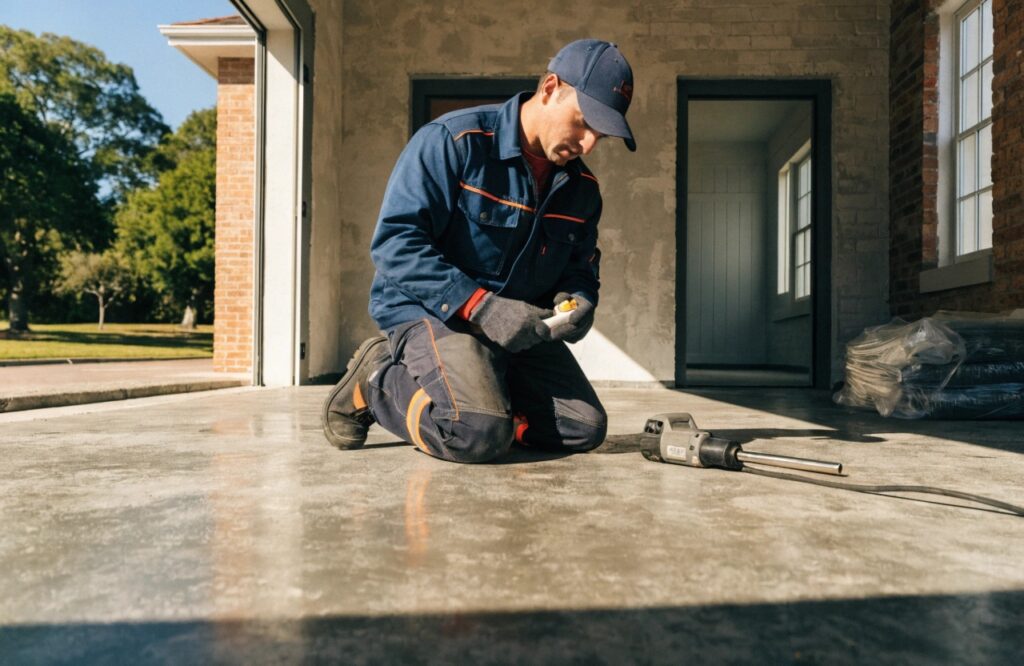
Moisture Vapour Transmission: The Technical Stuff Made Simple
Here’s the concept in plain terms. Concrete isn’t solid — it’s full of tiny pores. Water moves through those pores, either from rain soaking in from outside, groundwater pushing up from below, or just the natural moisture content locked in when the slab was poured.
That movement is called moisture vapour transmission (MVT). When epoxy seals the surface, it stops that vapour from escaping. The pressure builds under the coating until something gives — usually the bond between the epoxy and the concrete.
High MVT rates are common in coastal Queensland. According to Bureau of Meteorology climate data, the Sunshine Coast sees consistently high humidity and rainfall year-round — the water table stays high, the ground stays damp, and that adds to the moisture load on any concrete slab. It’s physics, not bad luck.
Failed Epoxy Jobs: When Contractors Skip Moisture Testing
Most failed epoxy installations on the Sunshine Coast come down to one thing — no moisture testing before the job started. A contractor shows up, grinds the floor, rolls on the epoxy, and is gone by Thursday. Looks great. Then summer hits, the humidity goes through the roof, and the floor starts failing.
The homeowner gets told it was a preparation issue, or the wrong product, or that they parked the car too soon. The real answer is almost always that nobody tested the slab. If you’ve been left with a botched job, the Queensland Building and Construction Commission handles defective work disputes and can help you understand your options.
Reputable installers test first. If your quote doesn’t include moisture assessment, ask about it directly.
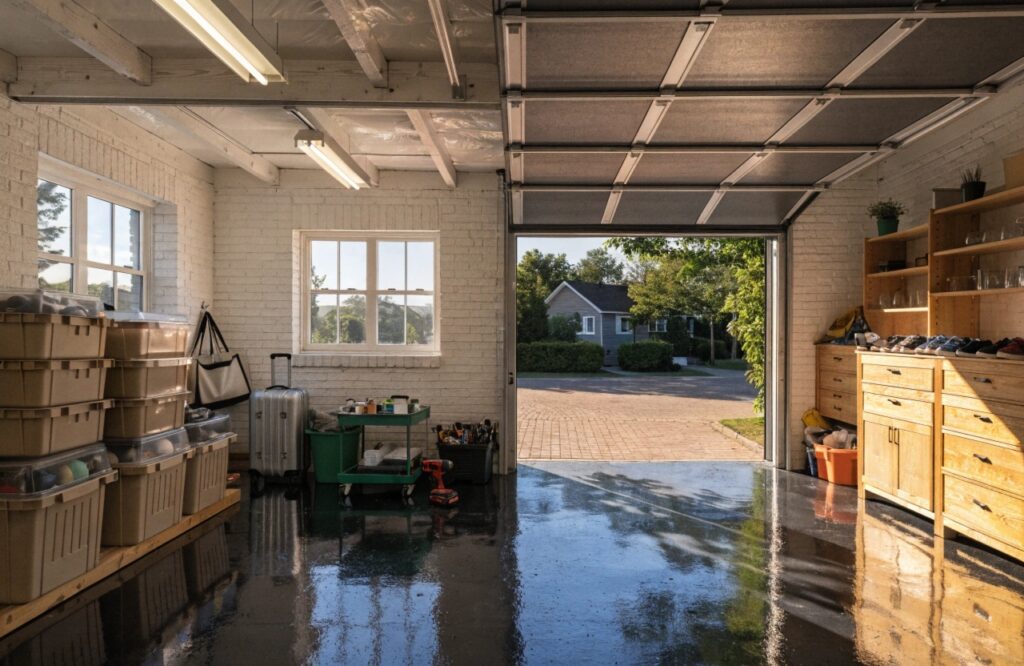
Solutions for High-Moisture Garage Floors
High moisture doesn’t mean you can’t have epoxy — it means you need the right system.
- Moisture-tolerant epoxy primers are designed to bond even when some vapour transmission is present
- Epoxy moisture barriers are applied as a separate coat before the main system, sealing off vapour movement
- Surface grinding and proper prep opens the pores so the primer can penetrate properly
- Drainage improvements around the slab perimeter can reduce groundwater pressure from below
For extreme cases, a polyurethane or polyaspartic system may be a better fit than standard epoxy — they handle moisture movement more forgivingly.
Ready to Get Your Garage Floor Done Right?
Moisture management isn’t optional on the Sunshine Coast — it’s the foundation of any epoxy job that’s actually going to last. If you’re getting quotes, ask every contractor how they handle moisture testing and what system they use for high-vapour slabs.
Get that conversation right upfront, and you’ll end up with a floor like Brendan’s neighbour has — still looking sharp five years later. Get it wrong, and you already know how that story ends.

