
If you've ever walked into a workshop, café kitchen, or retail space and thought "wow,…
How Long Does Epoxy Flooring Last? Sunshine Coast Guide 2026
My neighbour Jason had his garage floor done about four years back. Metallic flake epoxy, looked unreal. Last month he’s out there hosing it down and it still looks like the day it was installed — not a chip, not a peel, nothing. Meanwhile, my other neighbour Marcus painted his concrete around the same time and he’s already peeled the whole thing back and started again. Same street, completely different story.
So if you’re sitting there wondering how long does epoxy flooring last before you commit to the investment — that’s a fair question, and the answer isn’t as simple as a single number. A lot comes down to where you live, how it gets installed, and what happens after. On the Sunshine Coast, those three things matter more than almost anywhere else in the country.
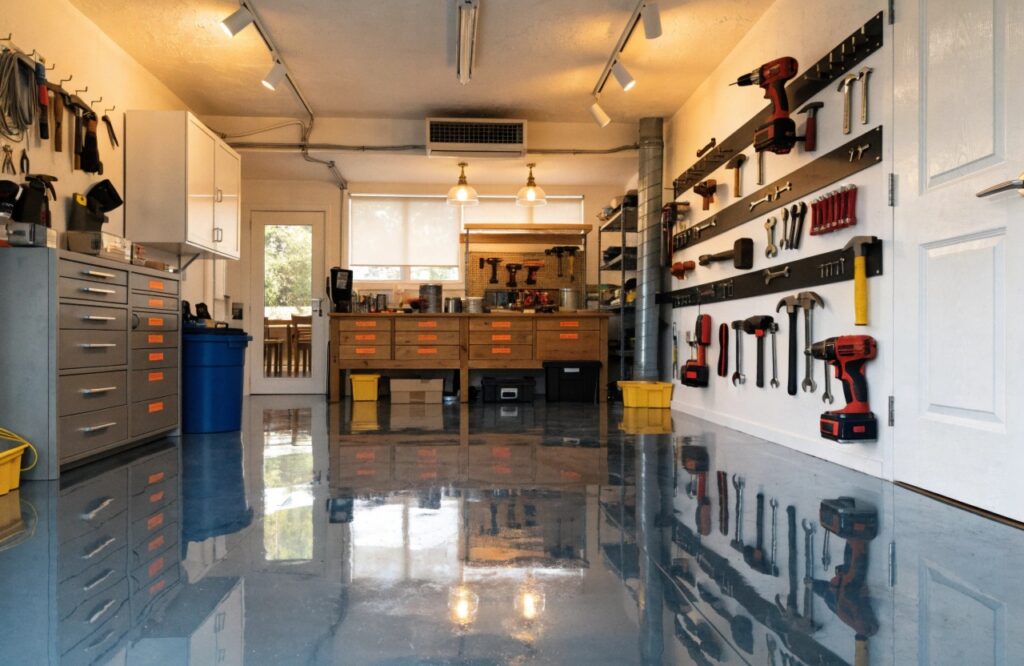
What Affects Epoxy Flooring Lifespan on the Sunshine Coast?
Epoxy flooring doesn’t have a single lifespan. It’s got a range — and where your floor lands in that range depends on a handful of things worth knowing before you sign anything.
• Surface preparation is probably the biggest one. If the concrete isn’t properly ground and prepped before the epoxy goes down, moisture gets trapped, the bond fails, and you end up with bubbling or delamination within a couple of years. A proper job means diamond grinding and moisture testing.
• Product quality matters just as much. There’s a big difference between a thin single-coat system and a full broadcast flake system with a quality polyaspartic or polyurethane topcoat. The better the system, the longer it performs.
• Traffic and use plays a role too. A garage that sees one car and weekend tinkering holds up differently than a workshop floor with heavy equipment, chemical spills, and daily foot traffic.
• The Sunshine Coast itself — the salt air, UV, and humidity cycles — chews through inferior coatings faster than you’d expect. A system that performs fine in Melbourne can show wear a lot quicker up here if it’s not spec’d for coastal conditions.
The Concrete Institute of Australia outlines best practice guidelines for concrete surface preparation and performance — and getting that prep right is where the lifespan of any coating really starts. Get all of these right and you’re looking at 10 to 20 years from a quality installation. Cut corners on any of them and you might be back to square one in three to five.
Residential vs Commercial Epoxy Flooring Durability
The lifespan expectations differ depending on whether you’re coating a home garage or a commercial space.
Residential epoxy floors — your garage, rumpus room, or outdoor entertainment area — typically last anywhere from 10 to 20 years with proper care. The traffic is predictable, the loads are manageable, and a good quality flake system with a polyaspartic topcoat handles the coastal conditions without much fuss.
Commercial epoxy floors are a different beast. Constant foot traffic, trolleys, forklifts, chemical exposure, commercial cleaning equipment. A well-specified commercial system can still reach 10 to 15 years, but it’s going to need more attention along the way — a maintenance coat every few years to keep the topcoat performing.
Here’s a rough comparison:
| Setting | Expected Lifespan | Key Wear Factors |
| Residential garage | 10-20 years | Light traffic, UV, salt air |
| Home workshop | 8-15 years | Tools, chemicals, heavier use |
| Retail/commercial | 7-12 years | High foot traffic, cleaning chemicals |
| Industrial/warehouse | 5-10 years | Heavy loads, forklifts, spills |
The system needs to match the environment. A residential-grade product in a commercial setting is going to fail early — and that’s usually where people get burned when they go with the cheapest quote.
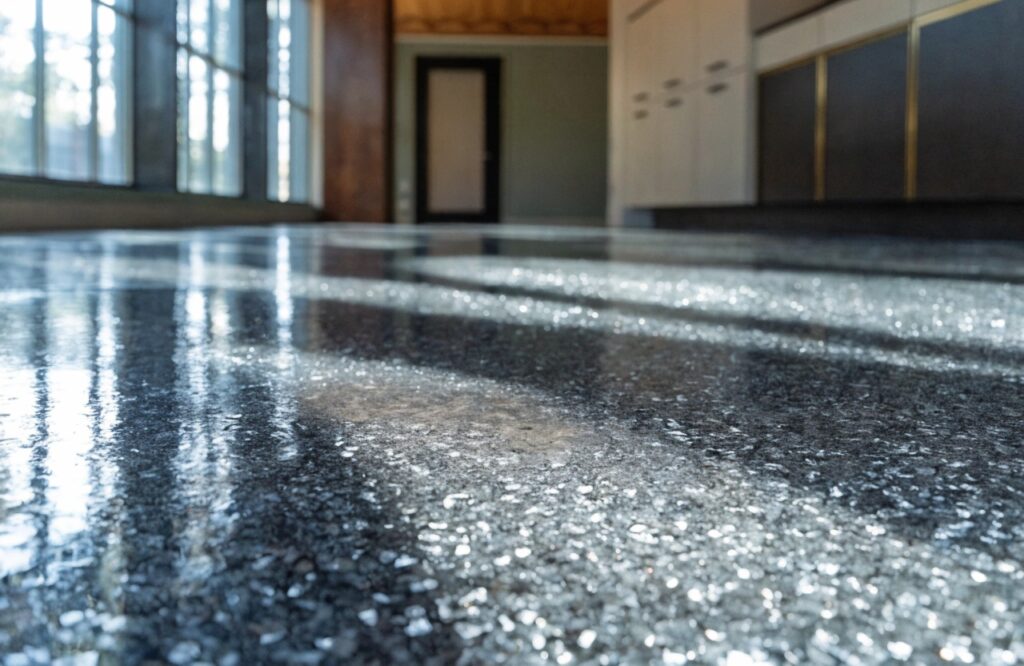
Queensland Climate Impact on Epoxy Floor Longevity
This section matters most for anyone on the Sunshine Coast specifically — because the climate up here does things to building materials that people from southern states don’t fully appreciate until they’ve lived it.
• Salt air corrosion is the big one. If you’re within a few kilometres of the coast — Mooloolaba, Caloundra, Noosa — the salt-laden air is constantly working on exposed surfaces. Inferior epoxy systems start to chalk, yellow, and lose adhesion faster in these conditions. A UV-stable topcoat isn’t optional here.
• Humidity cycling catches people off guard. The Sunshine Coast goes through significant humidity swings — humid summers, drier winters — and concrete moves with those cycles. If the epoxy system isn’t flexible enough to move with it, you get cracking and peeling. This is why moisture testing before installation matters so much up here.
• UV exposure is brutal in Queensland. Direct sunlight hitting an epoxy floor — particularly in open garages or outdoor entertainment areas — will break down a standard epoxy topcoat quickly. Polyaspartic topcoats handle UV far better, which is why reputable installers push them for any sun-exposed application.
• Storm season brings water ingress, debris, and rapid temperature shifts. A well-installed floor handles all of this fine, but it reinforces why prep work and product selection have to be right from day one.
The Bureau of Meteorology’s Sunshine Coast climate data shows just how significant the humidity and temperature swings are across the seasons — and why coatings that aren’t spec’d for these conditions don’t last. The Sunshine Coast isn’t a hostile environment for epoxy — it’s a great match when the system is chosen correctly. But it punishes shortcuts more than most places will.
Signs Your Epoxy Floor Needs Replacement
Not every imperfection means your floor is done. Some things are fixable, and some things are telling you it’s time to start fresh.
These are signs you can probably repair:
• Minor surface scratches or scuff marks
• Small isolated chips from dropped tools
• Dull or faded finish that’s lost its sheen
• A single section that’s lifted or bubbled
A maintenance coat or localised repair can often bring these back without a full redo.
These are signs the floor is genuinely at the end of its life:
• Widespread delamination — large sections lifting away from the concrete underneath. This usually points back to poor prep work on the original install.
• Peeling across multiple areas — if it’s happening in more than one spot, it’s not a patch job situation.
• Concrete deterioration underneath — if the slab itself is cracking or spalling, no topcoat fixes that without addressing the substrate first.
• Persistent moisture issues — if water is consistently coming up through the floor, the system has failed and it won’t improve on its own.
• Yellowing or chalking through the topcoat — surface yellowing from UV is sometimes cosmetic, but if it’s gone deep into the coating, you’re looking at a full replacement.
A good installer will tell you honestly which category you’re in. If someone’s pushing you toward a full replacement when a repair would do — or the other way around — that’s worth a second opinion.
Maximising Your Epoxy Floor Investment Through Proper Care
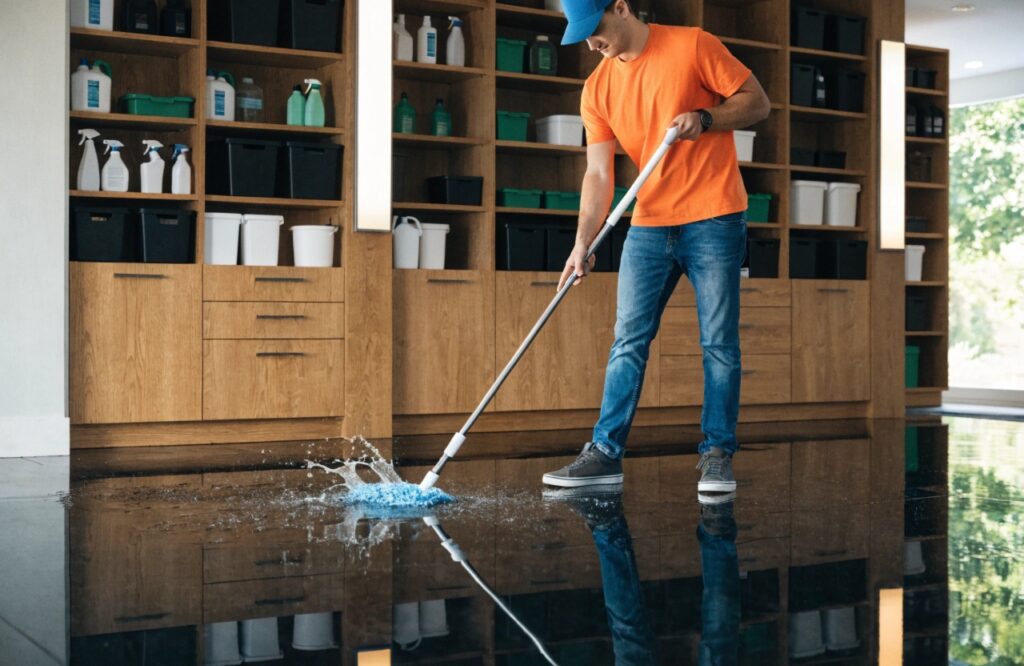
Epoxy flooring is genuinely low maintenance. But low maintenance doesn’t mean zero maintenance, and a little regular attention goes a long way toward getting the full lifespan out of your floor.
Day-to-day care is straightforward:
• Sweep or dust mop regularly to stop grit and sand building up — on the Sunshine Coast, that coastal sand acts like fine sandpaper underfoot and will dull the finish over time if it’s left sitting there
• Clean spills quickly, especially oils, chemicals, or anything acidic
• Use a pH-neutral cleaner for mopping — avoid anything harsh or abrasive
A few habits that protect the topcoat long-term:
• Put felt pads or rubber mats under heavy equipment or workbench legs
• Use a mat at the garage entry to catch sand and grit before it gets tracked across the floor
• Avoid dragging heavy or sharp objects directly across the surface
Every few years, it’s worth having a professional check the floor over. On the Sunshine Coast specifically, the UV and salt air conditions mean the topcoat takes more of a beating than in other climates. A maintenance coat applied at the right time — before the topcoat is fully degraded — can add years to the floor’s life without the cost of a full reinstall.
Think of it like servicing a car. You wouldn’t skip every service and then act surprised when the engine gives out. A bit of attention on a regular schedule keeps the whole system performing the way it should.
Warranty Coverage and What It Really Means
Most reputable epoxy flooring installers on the Sunshine Coast offer warranties somewhere between 5 and 10 years on residential work. Commercial warranties tend to be shorter — typically 2 to 5 years — reflecting the higher wear environment.
A warranty is only as good as what it actually covers, so read it carefully.
What a solid warranty should cover:
• Delamination or peeling under normal use conditions
• Adhesion failure not caused by external damage
• Manufacturer defects in the product itself
What most warranties won’t cover:
• Damage from impact or sharp objects
• Chemical damage from substances outside normal use
• Failure caused by pre-existing concrete issues that weren’t disclosed
• Normal surface wear and dulling over time
The other thing worth knowing is that warranties are tied to the installer staying in business. A five-year warranty from a company that folds in year two isn’t worth anything. Ask how long they’ve been operating locally, and whether the product carries a separate manufacturer’s warranty as a backup.
A warranty is a confidence signal, not a guarantee. The real guarantee is choosing the right installer and the right system from the start.
Ready to Get a Floor That Actually Lasts?
If you’re on the Sunshine Coast and you want epoxy flooring that’s going to hold up through the salt air, the UV, and the Queensland summers — the starting point is getting it done right the first time.
Get in touch with our team for an obligation-free quote. We’ll assess your space, talk through the right system for your conditions, and give you a straight answer on what to expect from your investment.

