
If you've ever walked into a workshop, café kitchen, or retail space and thought "wow,…
How Salt Air Destroys Maroochydore Floors — And How Epoxy Protection Stops It
A mate of mine over in Cotton Tree spent years doing the same thing — slapping a fresh coat of garage floor paint on every summer, watching it peel by Christmas, wondering why nothing ever stuck. Turns out, the salt air was already deep inside his slab doing its thing long before the paint hit the surface. The real issue isn’t what’s on top of the concrete. It’s what’s working through it from the inside out.
Maroochydore’s position on the Sunshine Coast is stunning, but it comes with a hidden cost most property owners only discover after the damage is done. Salt-laden sea breezes, Mooloolah River humidity, and Queensland’s relentless UV make this one of the most aggressive environments for unprotected concrete in Australia — and floors that look fine today can deteriorate faster than you’d expect.
How Salt Air Damages Concrete Floors Near the Coast
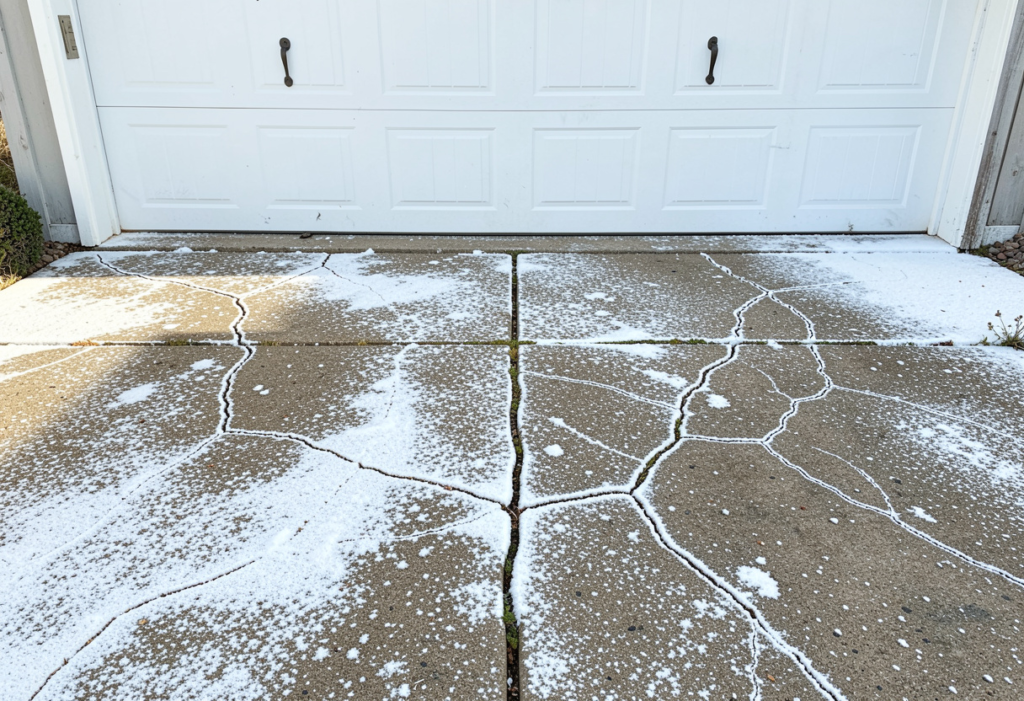
Salt air damages concrete floors through a process called salt crystallisation. Airborne salt particles penetrate the porous surface of unsealed or poorly sealed concrete and deposit crystals within the slab. As temperatures fluctuate — which happens daily on the Sunshine Coast — those crystals expand and contract, gradually fracturing the concrete from the inside out.
The visible signs of salt air damage on Maroochydore floors include:
- White powdery deposits (efflorescence) on the surface
- Surface flaking and spalling — concrete breaking away in layers
- Fine network cracks spreading across the slab
- Pitting and roughening of the concrete surface
- Rust staining where reinforcement steel is affected
Properties within 500m of the Maroochydore foreshore are at highest risk. Professional epoxy flooring systems create an impermeable barrier that prevents salt penetration and stops the crystallisation cycle entirely.
Why Maroochydore Properties Face Unique Flooring Challenges
Not every coastal town in Queensland deals with what Maroochydore deals with. This area sits at the intersection of three conditions that don’t often combine in one place — prevailing onshore winds pushing salt-laden air in off the Coral Sea, the Mooloolah River estuary keeping ambient humidity higher than surrounding areas, and the urban heat island effect in the CBD accelerating moisture cycling through concrete surfaces day after day. That combination is what makes epoxy flooring Maroochydore salt air protection a specification issue, not just a cosmetic one.
The Science Behind Coastal Concrete Deterioration
Standard residential concrete used in most Sunshine Coast homes is specified to AS 3600 classifications suited for inland conditions — not marine exposure. The B1 and B2 coastal zone classifications under that standard acknowledge that chloride ions from salt air penetrate concrete at a rate that standard mixes simply aren’t designed to resist long-term. What that means practically is that most garages and outdoor slabs poured in Maroochydore over the last 30 years are already working against themselves in this environment.
Why Standard Garage Floor Paint Fails Within 18 Months
Regular floor paint forms a film on top of the concrete. It doesn’t bond chemically — it sits on the surface. Salt-laden moisture vapour transmitting up through the slab has nowhere to go, so it builds pressure underneath the paint film until it bubbles, then peels. That’s the cycle my mate in Cotton Tree was stuck in. A properly specified epoxy system chemically bonds to the substrate and moves with the slab, which is why the two products aren’t even comparable in a coastal environment.
Understanding why standard paint fails is one thing — but knowing exactly how much risk your specific property carries is a different question altogether. And in Maroochydore, that depends a lot on where you are.
Cotton Tree to Point Cartwright — Coastal Exposure Zones Explained
Not all Maroochydore properties face the same level of salt exposure. Distance from the waterfront, street orientation, vegetation buffers, and building height all affect how aggressively the marine environment works on your floors. Here’s a practical local framework for understanding your specific risk level.
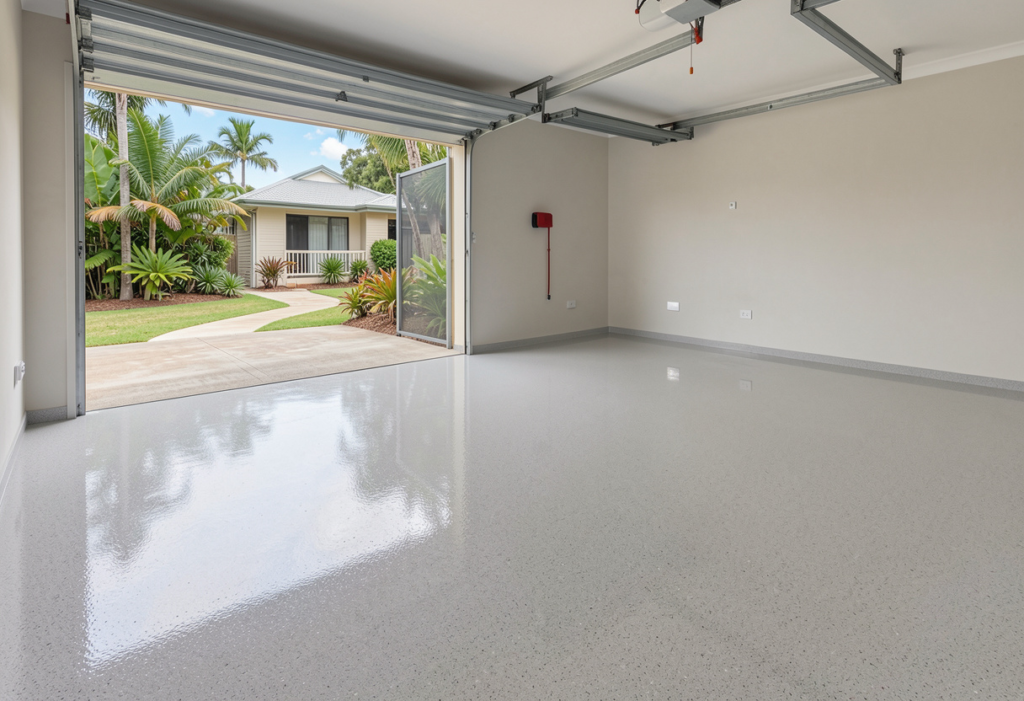
The 500m High-Risk Zone (Cotton Tree, Maroochydore Beach Foreshore)
Properties directly on the foreshore or within one street back are copping wind-driven salt spray on a daily basis during onshore conditions. For floors in this zone, the minimum recommended specification is a two-coat high-build epoxy system with a UV-stable polyaspartic topcoat. Annual inspections are worth building into your maintenance routine — not because the system fails, but because catching any early wear in a high-exposure zone saves you from a full recoat down the track.
The 500m–2km Moderate Risk Zone (Maroochydore CBD, River Precincts)
Salt air travels inland on the prevailing north-easterly winds, and the Mooloolah River corridor creates additional humidity channels that push moisture further into the CBD than most people realise. This zone covers the majority of Maroochydore’s residential properties, and a standard commercial-grade epoxy system is appropriate for most applications here. Don’t let “moderate risk” lull you into thinking inland specs are fine — they’re not.
Point Cartwright — The Wind Exposure Factor
Point Cartwright is an interesting one. A lot of homeowners here don’t think of themselves as high-exposure because they’re not directly on the beach — but the headland geography channels and accelerates coastal winds in ways that push salt deposition rates well above what you’d expect for the distance from the water. Properties here consistently need higher-spec systems than their address would suggest.
For Maroochydore’s residential streets, your zone gives you the baseline spec. But for the commercial waterfront precinct, the requirements go up another level entirely.
Maroochydore Marina District — Commercial Salt Air Solutions
The Marina precinct is one of the most demanding commercial flooring environments on the Sunshine Coast. Constant marine foot traffic, boat maintenance chemical exposure, salt water splash zones, and the requirement for AS4586-compliant anti-slip ratings create a specification challenge that standard commercial flooring products can’t meet. Coastal epoxy coating Sunshine Coast applications in this precinct need to tick multiple boxes simultaneously.
What Marina and Waterfront Businesses Actually Need From Their Floors
The dual requirement here is chemical resistance and anti-slip compliance — and they’re not optional. WorkSafe Queensland requirements for commercial wet areas reference AS4586 slip resistance classifications, with P4 and P5 ratings required for areas subject to wet pedestrian traffic. For business owners already stressed about compliance and closure time, that’s a lot to navigate without a contractor who knows these standards cold.
Epoxy System Specifications for Marine Commercial Environments
Broadcast anti-slip aggregate systems — where fine aggregate is scattered into the wet epoxy before the topcoat is applied — are the standard approach for achieving compliant slip resistance without sacrificing aesthetics. Chemical-resistant topcoat options protect against fuel, marine solvents, and the heavy-duty cleaning chemicals most marine businesses use regularly. Most commercial installations in this precinct can be completed over a single weekend, keeping business downtime to a minimum.
Buderim Hinterland vs Maroochydore Beachfront — Understanding the Difference
One of the most common mistakes Maroochydore homeowners make is taking flooring advice from someone who lives in the hinterland. Buderim sits 10km inland and 180m above sea level — the flooring challenges there are categorically different. Your coastal situation genuinely is unique, and it needs specific expertise to match.
How Elevation and Distance Change Everything
Here’s a side-by-side look at what that difference actually means for your floor:
| Condition | Buderim | Maroochydore Beachfront |
| Salt exposure level | Negligible | High to extreme |
| Ambient humidity range | 55–70% | 70–85%+ |
| Recommended system type | Standard residential epoxy | High-build + UV-stable topcoat |
| Expected system lifespan | 15–20 years | 10–15 years (with correct spec) |
A epoxy floor contractor whose experience is mainly inland may not understand coastal specification requirements — and applying a hinterland-spec product near the coast is one of the most reliable ways to end up with delamination, colour fade, and moisture bubbling within a couple of summers.
Alexandra Headland Wind Patterns and Their Impact on Floor Coatings
Alexandra Headland is one of the Sunshine Coast’s most spectacular places to live — and one of the hardest on exposed surfaces. The headland geography that creates those views also channels and accelerates coastal winds in ways that dramatically increase salt deposition on nearby properties. Commercial epoxy flooring Maroochydore installers who’ve worked this specific area will tell you the same thing.
The Venturi Effect — How Headland Geography Concentrates Salt Exposure
When wind hits a headland, it compresses and accelerates around the geography — a basic Venturi effect. For Alexandra Headland properties, that means salt-laden air hits surfaces with more force and frequency than flat coastal blocks at the same distance from the water. South-facing garages in this suburb face meaningfully different conditions than north-facing ones, and that should influence your system choice.
Choosing the Right Topcoat for High-Wind Coastal Exposure
UV stability ratings matter more at Alexandra Headland than almost anywhere else on the Sunshine Coast. Polyaspartic topcoats outperform polyurethane in high-UV, high-salt environments — they hold colour better, resist surface chalking, and maintain adhesion under the thermal cycling that headland properties deal with through summer. If you’re in this suburb, building an annual maintenance inspection into your plan from day one is just sensible.
Ready to Stop the Salt Damage for Good?
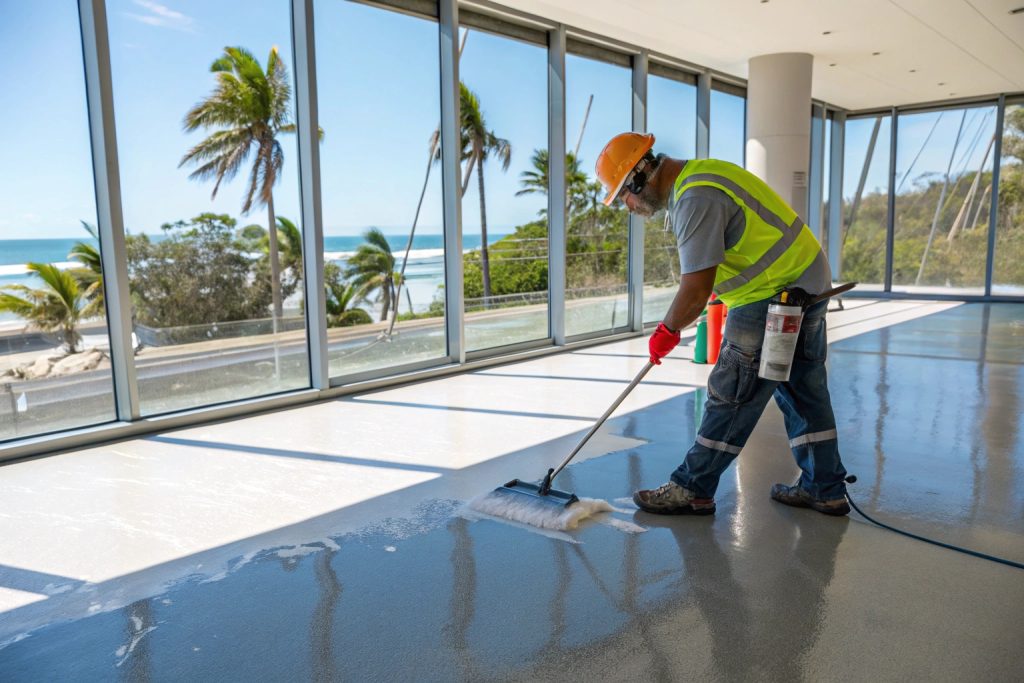
Salt air doesn’t take a day off, and neither does the damage it’s doing to your concrete right now. We work with Maroochydore homeowners and business owners across every coastal exposure zone — from the Cotton Tree foreshore to Alexandra Headland — specifying and installing epoxy systems that are built for what the Sunshine Coast actually throws at them. No guesswork, no inland specs applied to coastal slabs. Just the right system, properly installed, backed by real local results. Get in touch today for a free site assessment and we’ll tell you exactly what your floor needs.
Book Your Free Coastal Floor Assessment in Maroochydore
We assess your property’s specific salt exposure zone, test your existing concrete condition, and provide a written specification recommendation — at no cost and no obligation. Serving Cotton Tree, Alexandra Headland, the Marina District, and all Maroochydore suburbs.

