
If you've ever walked into a workshop, café kitchen, or retail space and thought "wow,…
Epoxy Floor Maintenance Mooloolaba Coastal
Epoxy Floor Maintenance in Mooloolaba: The Complete Coastal Care Guide
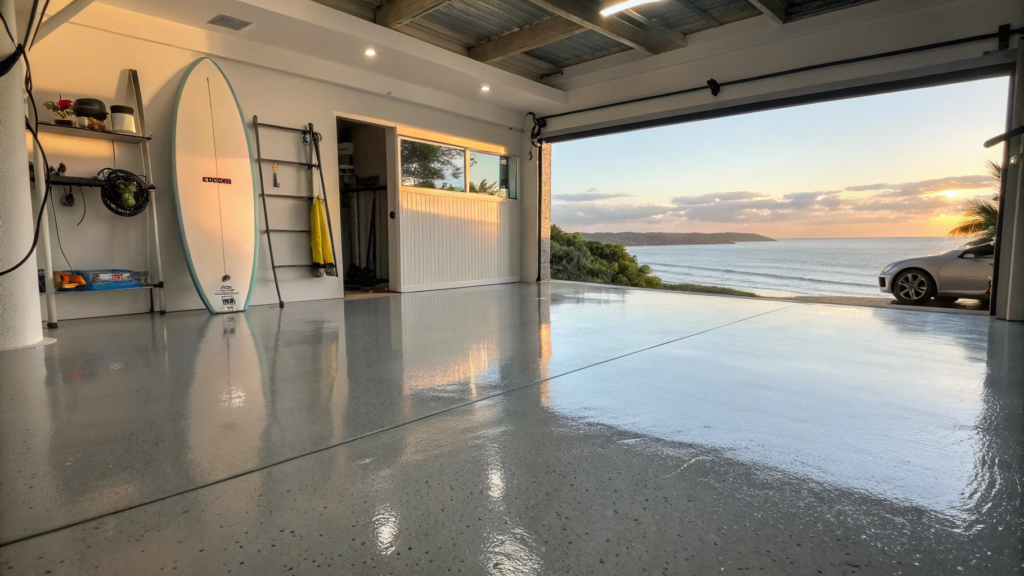
Mooloolaba homeowners choose epoxy flooring for good reason — it’s one of the few surfaces genuinely built for coastal living. The salt air rolling in off the Coral Sea, the sandy footprints after a morning at Mooloolaba Beach, the humidity that defines a Queensland summer: a quality epoxy coating handles all of it with ease, and with the right routine behind it, it keeps doing so for decades.
This guide gives you everything you need to get the most from your floors. From simple daily habits that take minutes, to seasonal checks, the best cleaning products for coastal conditions, and knowing when a professional refresh adds real value — consider this your go-to coastal maintenance reference. Your epoxy floor was chosen to suit the Sunshine Coast lifestyle. This guide makes sure it stays that way.
Why Mooloolaba’s Coastal Conditions Actually Suit Epoxy Flooring
Mooloolaba sits in one of Queensland’s most demanding environments for flooring — and epoxy is one of the very few systems purpose-built to thrive in it. The combination of high ambient humidity, salt-laden sea breezes, and heavy foot traffic from beach visits creates conditions that quickly degrade untreated concrete and many alternative coatings. Epoxy, when correctly formulated and installed, forms a non-porous, chemically bonded surface that resists moisture penetration, salt crystallisation, and the kind of surface abrasion that sandy feet deliver daily.
The Sunshine Coast’s climate — averaging around 283 sunny days per year according to the Bureau of Meteorology — also means UV exposure is a real consideration. Quality epoxy systems with UV-stable topcoats maintain their finish and colour integrity far longer than standard concrete sealers, which tend to chalk and peel under sustained Queensland sun.
For Mooloolaba homeowners, this matters because your floor is an investment, not just a surface. The right epoxy system, paired with a consistent maintenance routine, delivers decades of reliable performance. Understanding why it works in coastal conditions is the first step to making sure it always does.
Daily Cleaning Routines for Coastal Properties
The good news about epoxy floor maintenance in a coastal environment is that the daily routine is genuinely simple — and takes only a few minutes. The key is consistency rather than intensity. Small habits carried out regularly prevent the kind of build-up that, left unchecked, can gradually dull the finish over time.
Start with a daily dry sweep using a soft-bristle broom or dust mop to clear sand and grit brought in from the beach or garden. This single habit is the most impactful thing you can do for your floor’s long-term condition. Sand particles are surprisingly abrasive when ground underfoot across an epoxy surface repeatedly — clearing them quickly eliminates that risk.
For mopping, a weekly routine is sufficient for most coastal homes. Use a microfibre mop with warm water and a small amount of pH-neutral cleaner — wrung out well so the mop is damp rather than wet. Epoxy does not require heavy scrubbing; the surface’s non-porous nature means dirt sits on top rather than penetrating, making it genuinely easy to clean.
High-traffic zones — garage entries, laundry areas, and outdoor transitions — may benefit from a quick spot mop mid-week, particularly during summer when beach visits are frequent. Keep a small spray bottle of diluted cleaner nearby for fast touch-ups, and your floor will look consistently sharp with minimal effort.
Dealing with Sand and Salt Residue
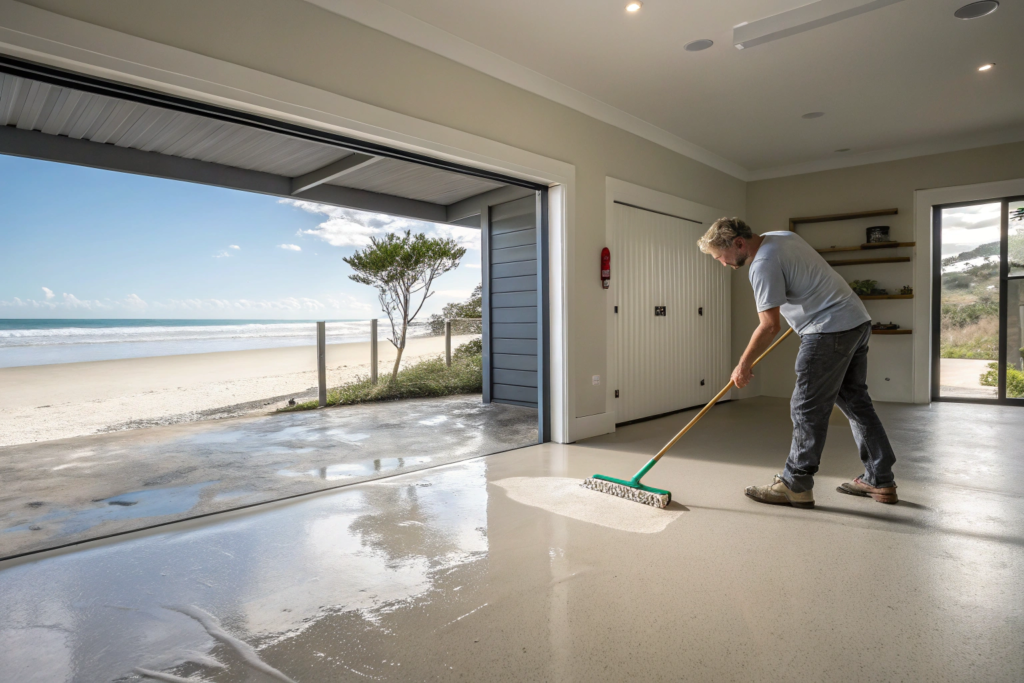
Of all the elements that Mooloolaba’s coastal environment introduces to your floors, sand and salt residue are the two most consistent. Both are manageable — and with a simple approach, neither poses any real threat to a quality epoxy surface.
Sand is the more immediate concern. Fine coastal sand carried in on bare feet or shoes acts as a mild abrasive, and while epoxy is far more resistant to surface wear than bare concrete, repeated grinding of sand particles will eventually dull the topcoat’s sheen. The solution is straightforward: sweep or dust-mop before the sand gets a chance to be walked across the surface. A quality entrance mat at every external door significantly reduces how much sand reaches the floor in the first place.
Salt residue is subtler but equally easy to address. In a coastal home, salt particles carried on the breeze or on wet skin can settle on floor surfaces and, if left to dry repeatedly, may leave a faint white residue. A damp mop with warm water dissolves and removes salt deposits quickly and completely. For heavier build-up after storm events or extended humid periods, a diluted solution of warm water and a few drops of pH-neutral dish soap works effectively without affecting the epoxy surface.
The principle across both is the same: address it regularly, and it stays effortless. Mooloolaba’s coastal environment is not a challenge for epoxy — it simply rewards a consistent routine.
Recommended Cleaning Products and Tools
Choosing the right products for your epoxy floor is straightforward once you understand one core principle: epoxy is a chemically stable surface, and you want to keep it that way. The right products clean effectively while preserving the topcoat’s integrity. The wrong ones — particularly harsh acids or alkaline degreasers — can cause gradual dulling or surface degradation over time.
Recommended tools:
- Soft-bristle broom or microfibre dust mop for daily sweeping
- Microfibre flat mop for weekly wet cleaning
- Soft-bristle scrub brush for spot cleaning stubborn marks
- Two-bucket mopping system (clean water and solution kept separate)
Recommended cleaning products:
- pH-neutral floor cleaner (look for products specifically labelled safe for sealed or coated floors)
- Warm water with a small amount of mild dish soap for general mopping
- Diluted white vinegar solution (1:10 ratio) for salt residue — effective and readily available
Products to avoid:
- Bleach or chlorine-based cleaners
- Harsh alkaline degreasers or solvent-based products
- Steel wool or abrasive scrubbing pads
- Citrus-based cleaners, which can affect the topcoat over time
For Mooloolaba homeowners, a simple setup — a quality microfibre mop, a soft broom, and a bottle of pH-neutral cleaner — covers 95% of daily and weekly maintenance needs. Keep it accessible, and the routine stays effortless.
Seasonal Maintenance Considerations

Mooloolaba’s seasons bring different conditions to your floors, and a small amount of seasonal awareness keeps your epoxy coating in peak condition year-round. The Sunshine Coast’s climate is broadly consistent, but each season introduces specific factors worth planning for.
Summer (December–February): High humidity and increased foot traffic from school holidays and beach visits define summer on the Sunshine Coast. Increase mopping frequency slightly during peak holiday periods, and ensure entrance mats are clean and absorbent — they work harder during summer. Humidity alone doesn’t affect cured epoxy, but wet feet carrying in sand and salt will be at their most frequent.
Storm Season (January–March): Queensland’s storm season can bring driving rain and wind-blown debris. After significant weather events, inspect your floor for any debris or moisture that has entered through garage doors or external transitions. A thorough mop-down post-storm removes any salt or organic residue before it dries.
Autumn and Winter (April–August): The Sunshine Coast’s mild winters are ideal for any maintenance or inspection tasks you’ve been deferring. Cooler, drier conditions make this the best time to assess topcoat condition, address any minor surface marks, and schedule a professional inspection if your floor is approaching its recommended recoat window.
Spring (September–November): As temperatures and humidity begin to rise again, re-establish your summer routine early. Check entrance mats and replace if worn.
A little seasonal awareness means your floor stays ahead of the conditions — not behind them.
Extending Floor Life in Marine Environments
A quality epoxy floor installed in a Mooloolaba home is built to last — the question is simply how to maximise that lifespan. In a marine environment, a few targeted habits make a measurable difference to long-term coating performance.
Monitor your topcoat condition. The topcoat is your floor’s primary defence layer, and it gives clear visual signals when it’s approaching the end of its service cycle. Gradual loss of sheen, particularly in high-traffic zones, is a normal part of a floor’s life and simply indicates it’s time for a professional recoat — not a full replacement. Catching this early and recoating proactively is far more cost-effective than waiting for the underlying layers to be affected.
Protect high-wear transition zones. The areas where outdoor meets indoor — garage entries, laundry thresholds, and sliding door transitions — experience the highest concentration of sand, moisture, and foot traffic. Quality rubber-backed entrance mats at every external entry significantly reduce wear in these zones. Check that mats are non-staining and designed for use on coated floors.
Use furniture pads and equipment mats. In garage workshops or storage areas, rubber pads under heavy equipment and vehicle jack stands prevent point-load stress on the coating surface.
Keep drainage clear. In garages and outdoor areas, ensure floor drainage is unobstructed so water doesn’t pool. Epoxy handles moisture exceptionally well, but standing water over extended periods is best avoided.
With these habits in place, a well-installed epoxy floor in Mooloolaba can deliver 15–25 years of reliable, attractive performance.
When to Call Professionals for Maintenance
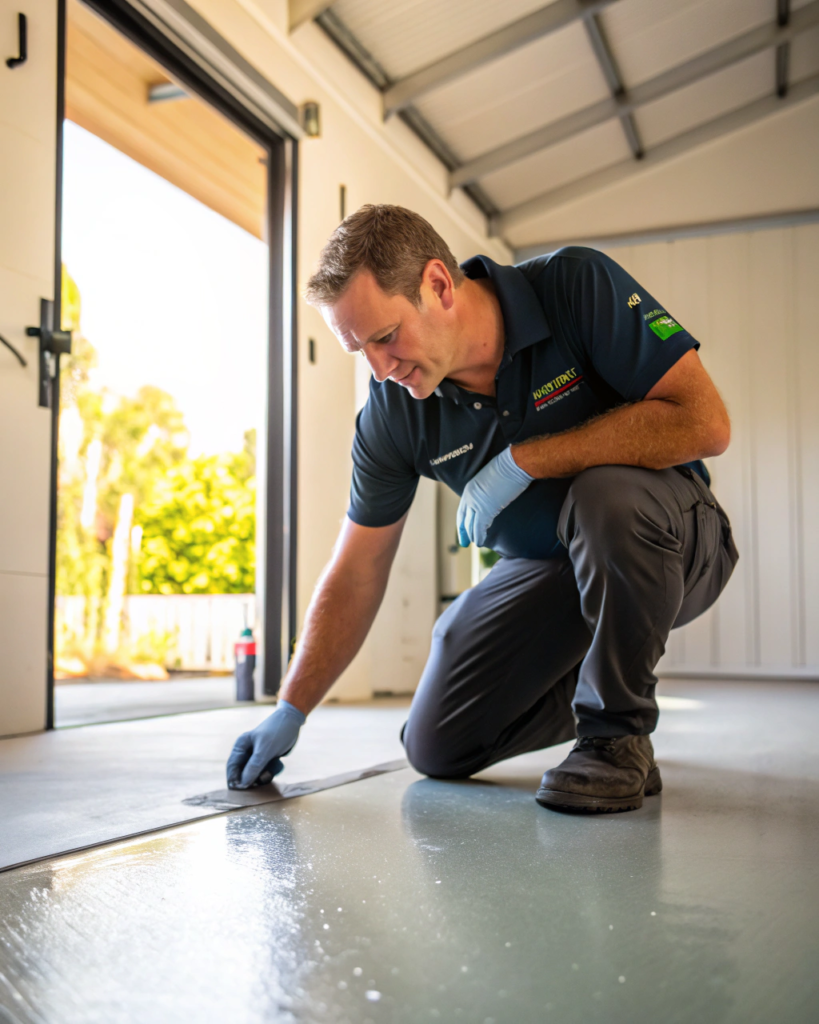
One of the most practical aspects of epoxy flooring ownership is knowing when a professional visit adds real value. For most of your floor’s life, day-to-day maintenance is entirely self-managed — but there are clear moments where professional involvement is worthwhile and cost-effective.
Signs your floor is ready for a professional assessment:
- Visible dulling or loss of sheen in traffic zones that doesn’t respond to cleaning
- Minor surface chips or edge lifting, particularly near thresholds or drainage points
- Small hairline cracks are developing in the substrate beneath the coating
- Your floor is 8–12 years old and has never had a professional inspection
What a professional maintenance visit typically includes:
- Full surface inspection and condition assessment
- Identification of any areas requiring spot repair before recoating
- Professional-grade cleaning to prepare the surface
- Topcoat recoat application where required, restoring the floor to near-original condition
The cost of a professional recoat is a fraction of a full floor replacement and, in Mooloolaba’s coastal environment, extends the life of your existing system significantly. It also provides an opportunity for your installer to assess whether any changes in the coastal conditions around your property — new drainage patterns, altered sun exposure — warrant any adjustments to the coating system.
Think of a professional maintenance visit as the equivalent of a car service: routine, straightforward, and far less expensive than the alternative. For peace of mind, always ensure your contractor is licensed through the Queensland Building and Construction Commission — a quick licence search takes seconds and confirms you’re working with a verified professional.
Ready to Protect Your Mooloolaba Floors?
Your epoxy floor is one of the smartest investments you can make for a Sunshine Coast home — and with the right maintenance routine, it rewards you with decades of performance, safety, and lasting visual appeal.
If you’d like a professional eye on your floor’s current condition, or you’re ready to discuss a recoat or new installation, our Sunshine Coast team is ready to help. We understand exactly what Mooloolaba’s coastal environment demands from a flooring system — and we’re right here in your backyard.
📞 Call us: 07 4158 6001 🌐 Visit: epoxyflooringsunshinecoast.com 📍 Find us: 75 Tanawha Rd, Tanawha QLD 4556
We’re happy to answer questions and provide honest, no-obligation advice — whether you’re looking after an existing floor or planning something new.

